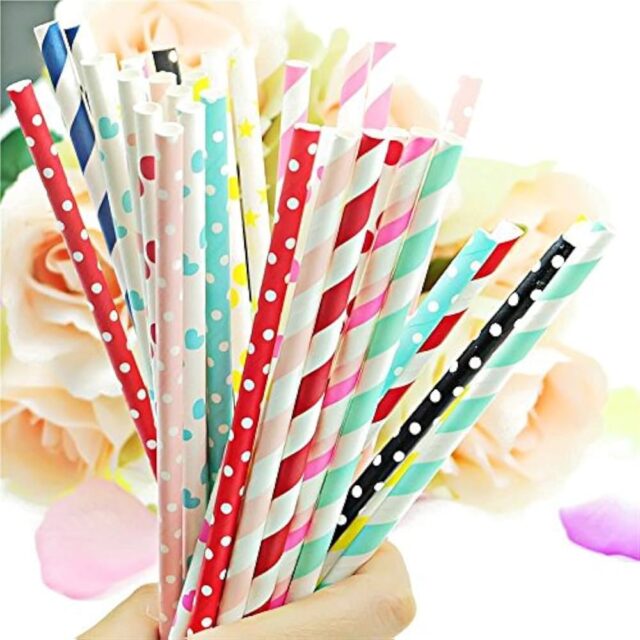
While much of the paper straw conversation in Singapore centers on cafés, hawker stalls, and delivery platforms, a quieter but equally significant shift has been happening on supermarket shelves. Household consumers across Singapore now routinely find paper straws stocked alongside — and increasingly instead of — plastic straws in the party supplies, household goods, and eco-living sections of major retailers like NTUC FairPrice, Cold Storage, Sheng Siong, and Giant.
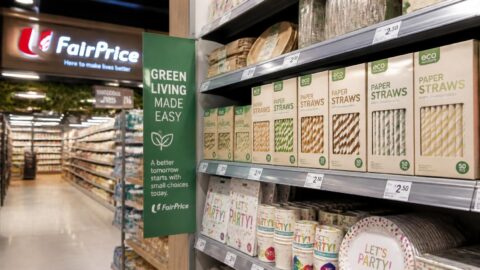
From NTUC FairPrice to Cold Storage, Singapore’s major supermarket chains are making paper straws a household staple alongside party supplies and eco-living goods.
Just a few years ago, paper straws in Singapore’s supermarkets were largely a niche product, tucked away in small eco-lifestyle sections and priced at a noticeable premium compared to standard plastic straws sold in bulk packs. Today, paper straws have moved into more prominent shelf positions, often placed directly alongside plastic alternatives in party supply and beverage accessory aisles, reflecting a broader mainstreaming of sustainable household products across the retail sector.
NTUC FairPrice, Singapore’s largest supermarket chain and a cooperative with strong ties to national sustainability messaging, has been particularly active in promoting paper straws as part of its broader “FairPrice Green” initiatives, which include reusable bag programs, plastic bag charges, and expanded eco-friendly product ranges spanning multiple categories beyond just straws.
| Product Type | Typical Price Positioning |
|---|---|
| Standard plastic straws (bulk pack) | Lowest cost |
| House-brand paper straws | Moderate, narrowing gap with plastic |
| Branded/imported paper straws | Highest premium |
| Reusable steel/silicone straw sets | Higher upfront cost, lower long-term cost |
One of the most consistent themes in Singaporean consumer feedback around retail paper straws has been price sensitivity. Paper straws in supermarkets typically cost meaningfully more per unit than plastic equivalents, a gap that retailers have worked to narrow through bulk sourcing agreements and, in some cases, house-brand paper straw products designed to offer a more affordable entry point for budget-conscious households.
Supermarket chains have found that framing paper straws within broader “eco-living” or “sustainable household” product categories — alongside items like reusable produce bags, bamboo cutlery sets, and biodegradable cling wrap — helps normalize the price premium by positioning it as part of a broader lifestyle choice rather than a standalone, isolated purchase decision.
Some Singaporean parents have specifically cited paper straws as a way to introduce children to sustainability concepts in an approachable, tangible way, using something as simple as a birthday party drink straw as a small teaching moment about environmental responsibility — a trend several retailers have picked up on in marketing materials targeting family shoppers.

From children’s birthday parties to festive family gatherings, Singaporean households increasingly rely on paper straws for casual home entertaining.
Major supermarket chains in Singapore have increasingly folded paper straw availability into broader corporate sustainability reporting, often referencing the Resource Sustainability Act’s packaging reporting requirements as context for expanding eco-friendly product ranges. While straws represent a tiny fraction of overall packaging volumes reported under such frameworks, their consumer visibility makes them a useful, easily communicated example within broader sustainability messaging aimed at everyday shoppers.
Several retailers have also partnered with local social enterprises and small businesses producing paper straws domestically or regionally, using in-store signage to highlight these partnerships as part of broader “support local, support sustainable” marketing campaigns that resonate with increasingly values-driven Singaporean consumers.
Retailers have used in-store signage, product packaging callouts, and loyalty app notifications to educate shoppers on the environmental rationale behind choosing paper over plastic straws, often citing marine plastic pollution statistics and Singapore’s national sustainability targets as context. This point-of-sale education has proven more effective than pricing alone in shifting consumer preference, according to feedback shared by several retail sustainability teams operating in the local market.
Are paper straws significantly more expensive than plastic at Singapore supermarkets? Yes, though house-brand options have narrowed the price gap considerably compared to a few years ago, making sustainable choices more accessible to budget-conscious shoppers.
Do Singapore supermarkets sell reusable straw alternatives too? Some retailers stock reusable steel or silicone straw sets, often bundled with cleaning brushes, as a longer-term alternative for households looking to move away from single-use options entirely.
Why do retailers highlight local sourcing for paper straws? Several partner with local social enterprises and small businesses, using in-store signage to support “buy local, buy sustainable” messaging that resonates with values-driven shoppers increasingly interested in supply chain transparency.
Can shoppers find paper straws through online grocery delivery in Singapore? Yes — most major supermarket chains now offer eco-friendly product filters on their online platforms, making it easier for shoppers to find and compare sustainable straw options without visiting a physical store.
As Singapore’s household sustainability habits continue evolving, supermarket paper straw offerings are likely to expand further, potentially including reusable straw sets bundled with cleaning brushes as a longer-term alternative for regular household use. For now, the presence of paper straws on supermarket shelves — alongside plastic alternatives rather than replacing them outright — reflects Singapore’s broader, gradual approach to sustainability: giving consumers the choice, information, and gentle encouragement needed to shift habits at their own pace.