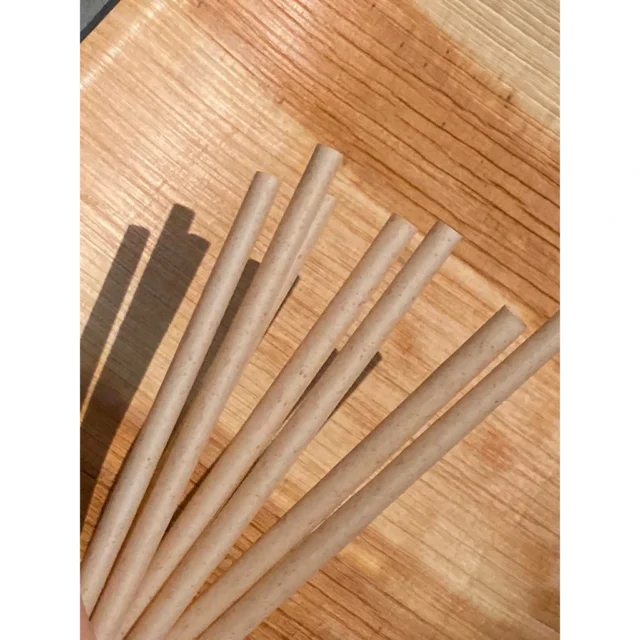
Switching to compostable straws sounds simple until you’re the one managing inventory, training staff, and fielding customer questions about why the new straw feels different. This guide walks foodservice operators through the full transition, from first order to full rollout.

Switching a restaurant or café from plastic to compostable straws involves a structured operational plan covering inventory audits, supplier vetting, staff training, and proper waste disposal.
Before ordering anything, get clear on the basics:
This audit prevents over-ordering and helps you choose the right straw types for your actual drink menu — a boba shop has very different needs than a coffee bar.
| Your Drink Type | Recommended Straw Material | Why |
|---|---|---|
| Iced coffee, cold brew | PLA or bagasse | Holds up well in cold, acidic drinks |
| Smoothies, milkshakes | Bagasse or wide-diameter PLA | Sturdier for thicker liquids |
| Boba tea | Wide bagasse straws | Wide enough for tapioca pearls, holds shape |
| Hot coffee, tea | Paper or heat-treated bagasse | PLA can soften in high heat |
| Cocktails | PLA stir/sip straws | Good balance of rigidity and presentation |
Not all “compostable” claims are equal. When evaluating suppliers, ask for:
Pick one location or one week to trial the new straws before switching everywhere:
Your team needs to know more than “we changed straws.” Cover:
Silence invites confusion; a little context builds goodwill. Consider:
Buying compostable straws without a composting plan is like buying a recycling bin and throwing it in a landfill. To capture the real benefit:
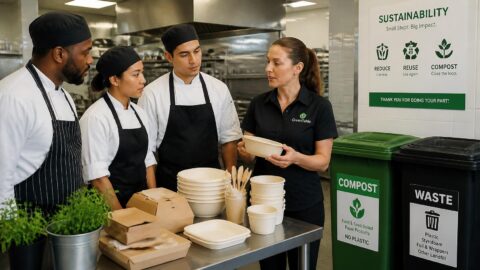
Equipping your team with clear communication scripts and setting up dedicated commercial composting bins ensures your sustainability transition is successful and transparent.
| Week | Action |
|---|---|
| Week 1 | Audit usage, request samples from 2–3 suppliers |
| Week 2 | Run trial with staff and select customers |
| Week 3 | Finalize supplier, place bulk order, prep signage |
| Week 4 | Full rollout, staff training complete, disposal bins in place |
Will customers notice or complain? Some will, especially early on. Most complaints fade within a few weeks as customers adjust — clear communication reduces friction significantly.
Should I charge extra for compostable straws? Some businesses absorb the cost as part of brand positioning; others add a small eco-fee. Test what fits your margins and customer base.
What if my area doesn’t have composting facilities? You can still switch — the straws will behave the same during use — but be honest with customers about disposal limitations, or consider paper as a more realistic end-of-life alternative in your area.
Switching to compostable straws is as much an operational project as an environmental one. The businesses that succeed treat it like any other supply chain change: audit, trial, train, communicate, and follow through on disposal. Do it right, and it becomes a genuine point of differentiation — not just a line item on your supply order.
Next in this series: a deep dive into the raw materials themselves — PLA, sugarcane bagasse, wheat straw, and bamboo — and how each one performs.