With state bans, FOGO systems, and a genuinely confusing mix of certifications in play, it’s no surprise Australians hold onto a fair few misconceptions about compostable straws. Here are the myths worth clearing up.
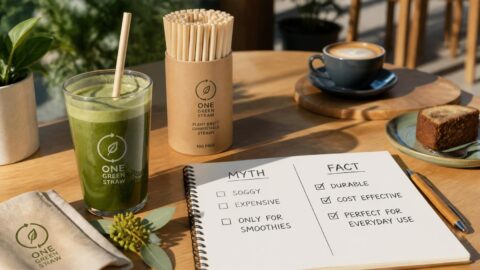
From assumptions about council FOGO bins and plastic straw bans to cost and durability misconceptions, compostable straws in Australia are surrounded by persistent myths. Let’s separate fact from fiction.
Reality: As covered in our FOGO-specific guide, many councils accept only genuine food and garden organics in FOGO bins, not packaging — even certified compostable packaging. Always check your specific council’s guidelines rather than assuming.
Reality: There’s no single national ban — regulation happens at the state and territory level, and while most states have implemented bans, the specific rules, timelines, and exemptions differ by jurisdiction, as detailed in our state-by-state breakdown.
Reality: Several states, notably Queensland, specifically exclude oxo-degradable and other non-genuinely-compostable “biodegradable” plastics from compliance. Genuine compliance requires certification against recognized standards like AS 4736, not just biodegradable marketing language.
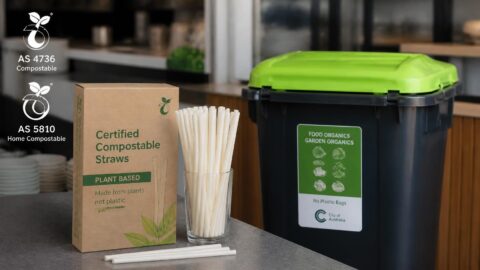
Understanding local council FOGO guidelines and looking for genuine AS 4736 or AS 5810 certifications ensures your Australian business stays fully compliant and environmentally grounded.
Reality: Modern compostable straws, particularly well-made PLA and bagasse options, hold up for several hours in typical cold drinks — comparable to or better than paper straws. Early-generation products from years ago had more legitimate durability issues that have largely been addressed through improved manufacturing.
Reality: Every state ban with straw restrictions includes an accessibility exemption allowing flexible plastic straws to remain available specifically for people with disabilities who require them, typically provided on request rather than by default.
Reality: As covered in our AUD cost guide, the price gap between compostable materials and what plastic straws used to cost is real but modest in most cases, particularly at bulk order volumes — often a manageable few thousand dollars annually even for mid-size hospitality operations.
Reality: Even without ideal composting outcomes, compostable straws are made from renewable materials rather than petroleum and don’t contribute to the same long-term microplastic pollution as conventional plastic — a real, if reduced, benefit compared to the plastic straws they’ve replaced.
Reality: As explained in our AS 4736 certification guide, straws certified only for industrial/commercial composting (AS 4736) may not reliably break down in a home compost bin, which typically runs cooler than commercial facilities. Home composting requires specifically AS 5810-certified products for reliable results.
Reality: As our state-by-state comparison shows, ban timing, specific exemptions, and enforcement approaches vary meaningfully across South Australia, Queensland, WA, Victoria, NSW, the ACT, Tasmania, and the Northern Territory — treating them as identical can lead to compliance gaps for multi-state businesses.
| Myth | Fact |
|---|---|
| All councils accept compostable straws in FOGO | Many only accept food/garden waste, not packaging |
| National blanket plastic straw ban | State-by-state regulation, with varying rules |
| “Biodegradable” label = compliant | Requires genuine certification like AS 4736 |
| Dissolves quickly in drinks | Holds up for hours in most modern products |
| No plastic straws available to anyone | Accessibility exemption exists in every banning state |
| Costs dramatically more than plastic did | Modest, budgetable cost difference at scale |
| Pointless if it ends up in landfill | Still offers renewable-material and microplastic benefits |
| Home and commercial composting are the same | Requires different certifications (AS 5810 vs AS 4736) |
| Every state handles it identically | Meaningful state-by-state variation exists |
Australia’s genuinely fragmented regulatory landscape — different state timelines, inconsistent council FOGO policies, and two distinct national compostability standards (AS 4736 and AS 5810) — creates more room for confusion than in countries with simpler, more unified systems. Add to that the natural spread of outdated information from earlier, lower-quality compostable straw products, and it’s easy to see why misconceptions stick around.
Why do so many myths involve FOGO bins specifically? Because FOGO is a relatively newer, still-expanding system across Australian councils, and public understanding of exactly what it accepts hasn’t fully caught up with its rollout — leading to reasonable but incorrect assumptions.
Is it worth double-checking compostability claims even for well-known brands? Yes — certification, not brand reputation alone, is what confirms a product genuinely meets AS 4736 or AS 5810 requirements, and it’s a fair, easy question to ask any supplier.
Are these myths unique to Australia, or do similar misconceptions exist elsewhere? Some, like assuming “biodegradable” equals “compliant,” are common globally, while others, like FOGO-specific confusion, are distinctly tied to Australia’s particular waste infrastructure and regulatory setup.
Cutting through the confusion around compostable straws in Australia comes down to checking the specifics — your state’s actual regulations, your council’s actual FOGO policy, and your supplier’s actual certification — rather than relying on general assumptions. With accurate information, Australian businesses and households can make genuinely informed choices about a product that’s become part of everyday life across the country.
Compostable straws remain a solid, compliant choice across Australia’s hospitality sector — as long as expectations are grounded in how the country’s specific regulations and waste systems actually work.