As Malaysia’s capital and largest city, Kuala Lumpur sits at the center of the country’s paper straws malaysia story — a place where gleaming shopping malls, 24-hour mamak stalls, and a growing corporate sustainability culture all intersect within a few square kilometers of the KLCC skyline.
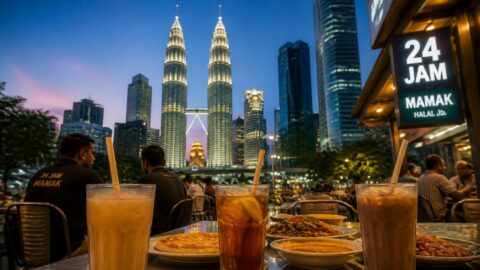
From the gleaming corporate towers of KLCC and tenant-wide mall sustainability guidelines to the bustling outdoor tables of 24-hour mamak stalls, Kuala Lumpur’s paper straw transition reflects a dynamic capital city balancing modernization with tradition.
Kuala Lumpur’s dense concentration of shopping malls — from Pavilion KL to Suria KLCC and Mid Valley Megamall — has played an outsized role in driving paper straw adoption across the city. Mall management companies have increasingly introduced tenant-wide sustainability guidelines, pushing F&B outlets toward paper straws and reduced single-use plastics as part of broader green building certification efforts.
| Venue Type | Adoption Level | Key Driver |
|---|---|---|
| Shopping mall food courts | High | Mall-wide sustainability policies |
| International café chains | High | Global brand standards |
| Mamak stalls (24-hour eateries) | Mixed, gradually increasing | Cost sensitivity, local council pressure |
| Independent hawker stalls | Lower, uneven | Price sensitivity, informal operations |
| Corporate office cafeterias | High | ESG commitments, KLCC-area businesses |
Kuala Lumpur’s iconic mamak stalls — open-air, 24-hour eateries serving teh tarik, roti canai, and a mix of Malay, Indian, and Chinese-influenced dishes — represent a genuinely distinctive segment of the city’s straw story. Many mamak beverages, particularly teh tarik and kopi, are traditionally served in glasses without straws, similar to how coffee and tea traditions in other countries have naturally lower straw dependency. However, iced beverages and bottled drink orders have driven gradual paper straw adoption even within this traditionally straw-light dining culture.
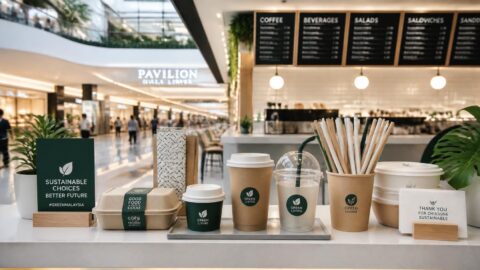
The heavy concentration of high-end shopping malls across Kuala Lumpur has driven tenant-wide green building guidelines, accelerating paper straw adoption far ahead of municipal mandates alone.
As Malaysia’s primary financial and corporate hub, the KLCC and Bukit Bintang areas host numerous multinational company offices, many with their own corporate ESG commitments that extend to F&B vendors within their buildings. This has created a business environment where paper straw adoption often moves faster than local council mandates alone would require, driven instead by corporate tenant expectations and building management sustainability certifications.
Kuala Lumpur has experienced a significant bubble tea boom in recent years, similar to trends across the broader Southeast Asian region, and this has created the same straw engineering challenge documented elsewhere — standard paper straws struggle with tapioca pearls, pushing bubble tea vendors toward thicker, reinforced straw options specifically designed for textured drinks.
Dewan Bandaraya Kuala Lumpur (DBKL), the city’s local government authority, has issued guidelines encouraging F&B premises to reduce single-use plastics, including straws, as part of broader environmental initiatives. Enforcement has generally focused on larger, more visible establishments first, with smaller independent vendors facing less consistent oversight — a pattern common across many of Malaysia’s urban centers.
Do all Kuala Lumpur malls require paper straws? Many major malls have introduced sustainability guidelines encouraging or requiring reduced plastic use among F&B tenants, though enforcement consistency varies by mall operator.
Do mamak stalls in KL use paper straws? Adoption is mixed — many traditional beverages like teh tarik are served without straws by custom, while iced and bottled drinks have seen more gradual paper straw adoption.
Is Kuala Lumpur ahead of other Malaysian cities in adopting paper straws? Generally yes — the concentration of malls, corporate offices, and international tourism has driven faster adoption compared to smaller Malaysian cities and towns.
Kuala Lumpur’s combination of dense mall infrastructure, significant corporate presence, and heavy international tourism traffic gives it a distinctive multi-driver adoption pattern rarely found together in Malaysia’s smaller cities, where typically only one or two of these factors — tourism, corporate pressure, or municipal policy — tends to dominate the local straw transition story.
Kuala Lumpur’s paper straw story reflects the layered character of Malaysia’s capital — where corporate sustainability culture, international tourism, and deeply rooted mamak and hawker traditions all shape adoption at different paces. As mall operators and corporate tenants continue pushing sustainability standards forward, expect KL’s traditional beverage stalls to gradually follow suit, much as they have with other modernization trends over the past two decades.