Kuching, the capital of Sarawak and one of Borneo’s most historically rich cities, presents its own distinctive chapter within Malaysia’s paper straws malaysia story. Known for its riverside charm, distinctive Sarawakian cuisine, and role as a gateway to national parks like Bako and Semenggoh, Kuching’s approach to sustainable packaging reflects a blend of biodiversity tourism and its own strong local food identity.
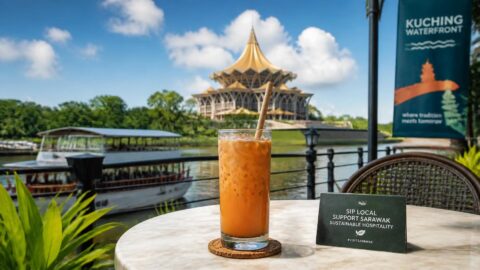
As the gateway to Sarawak’s rainforests and biodiversity, Kuching balances a naturally lower straw-dependent food culture with a growing commitment to sustainable packaging, driven largely by its vibrant riverside tourism and ecotourism sectors.
The Kuching Waterfront, a well-developed promenade along the Sarawak River, hosts numerous cafés and restaurants that have become central to the city’s contemporary dining and tourism identity. These riverside establishments generally show stronger, more consistent paper straw adoption than the city’s older, inland kopitiams, reflecting patterns seen in other Malaysian cities where waterfront tourism development accelerates sustainability-conscious business practices.
| Local Specialty | Serving Style | Straw Dependency |
|---|---|---|
| Sarawak laksa | Bowl, eaten with spoon | None |
| Kolo mee | Bowl, eaten with utensils | None |
| Teh C Peng Special (iced milk tea) | Glass or cup with straw | High |
| Kompia (bread) with drinks | Varies by drink ordered | Depends on beverage |
| Ais Kacang | Bowl with spoon | None |
Much of Kuching’s most iconic culinary exports — Sarawak laksa, kolo mee, and ais kacang — are traditionally eaten with spoons or chopsticks rather than sipped through straws, given their soup, noodle, or shaved-ice dessert format. This means Kuching’s core culinary identity carries a naturally lower baseline straw dependency than cities built more heavily around iced beverage culture, concentrating the practical impact of paper straw adoption primarily on standalone drink orders like iced milk tea.
Kuching serves as the primary gateway for visitors heading to Semenggoh Wildlife Centre, known for its orangutan rehabilitation program, and Bako National Park, one of Sarawak’s most visited protected areas. Tour operators and F&B businesses serving this conservation-tourism segment have generally adopted paper straws consistently, similar to patterns observed in Kota Kinabalu’s marine park tourism sector, often integrating sustainability messaging into the broader wildlife conservation narrative that draws visitors to these destinations.
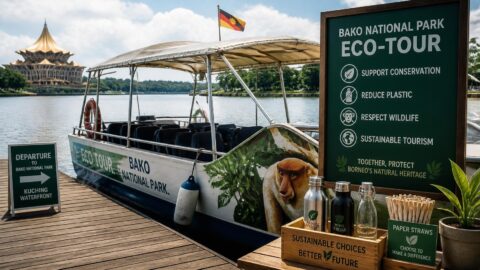
Operators guiding visitors to conservation sites like Bako National Park and the Semenggoh Wildlife Centre are among Kuching’s most consistent adopters of sustainable paper straws, aligning their packaging choices with the city’s broader biodiversity and wildlife conservation narrative.
Kuching’s historic commercial districts, including the Old Bazaar and India Street areas near the waterfront, host a mix of traditional trading businesses and newer tourism-oriented cafés, creating a similar old-meets-new dynamic to heritage districts seen in Penang and Malacca. Traditional trading shops in these areas have generally shown slower straw-related packaging changes, given their focus on retail goods rather than F&B service, while nearby cafés catering to tourists have adopted more readily.
Sarawak, as one of Malaysia’s two Borneo states alongside Sabah, has generally taken a somewhat more measured, less centrally-coordinated approach to plastic reduction policy compared to Peninsular Malaysian states like Penang and Selangor, consistent with the broader decentralized pattern seen across Malaysia’s environmental regulation. Local Kuching municipal council guidelines have provided some encouragement toward reduced single-use plastics, though enforcement has generally been less prominent than in Peninsular Malaysia’s more established policy states.
Kuching shares clear similarities with Kota Kinabalu’s ecotourism-driven adoption pattern, given both cities’ roles as gateways to Borneo’s natural attractions, though Kuching’s distinctive noodle and soup-based culinary tradition creates an even lower baseline straw dependency than Kota Kinabalu’s more beverage-diverse food scene.
Why does Sarawakian cuisine have lower straw dependency than other Malaysian food cultures? Iconic dishes like Sarawak laksa and kolo mee are eaten with spoons or utensils rather than sipped through straws, given their soup and noodle-based format, naturally reducing overall straw usage.
Do tour operators near Bako National Park use paper straws? Yes — conservation-tourism operators in this segment have generally adopted paper straws consistently, often as part of broader environmental messaging tied to the destinations they serve.
Is Kuching’s approach to plastic regulation similar to Peninsular Malaysia? Not entirely — Sarawak has generally taken a more measured, less centrally-coordinated policy approach compared to more established Peninsular Malaysian states like Penang and Selangor.
Kuching’s paper straw journey illustrates how a city’s core culinary identity can meaningfully shape the practical scope of sustainability regulation. With much of Sarawak’s most iconic food naturally straw-free by tradition, Kuching’s transition has concentrated where it matters most — standalone beverages and the tourism sector connecting visitors to Borneo’s remarkable rainforest and wildlife heritage.