Shah Alam, the capital of Selangor state and one of Malaysia’s few purpose-built planned cities, offers a distinctive case study within the country’s broader paper straws malaysia landscape. Unlike organically grown cities with centuries of layered development, Shah Alam’s deliberately planned urban structure has shaped a notably systematic, council-driven approach to its transition away from plastic straws.
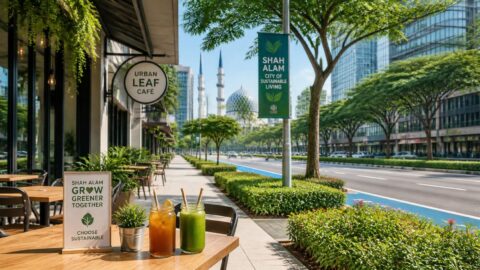
As a purpose-built planned city, Shah Alam has navigated the transition away from plastic straws through a notably systematic, council-coordinated approach, reflecting the same organized urban design that defines the city’s character.
Established in the 1970s as a planned administrative and residential city, Shah Alam features organized zoning, wide boulevards, and a level of centralized urban planning uncommon among Malaysia’s older, more organically developed cities. This planning-forward character has extended naturally into how the city’s local government, Majlis Bandaraya Shah Alam (MBSA), has approached environmental policy implementation, including single-use plastic reduction.
| Policy Element | Description |
|---|---|
| No-plastic-straw guidelines | Issued for F&B premises within Shah Alam’s jurisdiction |
| Phased implementation | Structured rollout across different business categories |
| Zoning-based enforcement | Commercial districts monitored systematically |
| Public awareness campaigns | Coordinated council-led education initiatives |
As Selangor’s state capital, Shah Alam operates within one of Malaysia’s more prominent state-level plastic reduction policy environments, with Selangor recognized alongside Penang as having relatively established no-plastic-straw initiatives compared to other Malaysian states. This state-level policy backdrop has reinforced Shah Alam’s own municipal-level enforcement efforts, creating a more consistent regulatory environment than seen in states with less developed policy frameworks.
Shah Alam’s major shopping destinations, including Setia City Mall and other planned commercial centers built as part of the city’s broader urban development, have generally shown high, consistent paper straw adoption, benefiting from the same organized zoning and management structures that characterize the city’s overall planning approach. This mirrors patterns seen in Kuala Lumpur’s mall-driven adoption, though within a more deliberately planned commercial environment.
As a significant administrative center hosting various Selangor state government offices and institutions, Shah Alam’s substantial government and civil service workforce has created demand patterns similar to corporate office districts elsewhere in Malaysia, with institutional cafeterias and nearby F&B businesses often showing procurement-driven, systematic compliance rather than the more organic, gradual adoption seen in less institutionally-dense areas.

Consistent with the city’s organized zoning, Shah Alam’s major commercial and shopping destinations have demonstrated high, reliable adoption of paper straws, benefiting from the same management structures that define the city’s broader urban planning.
While Kuala Lumpur’s paper straw adoption has been shaped significantly by mall operators and corporate tenant pressure operating somewhat independently of local government coordination, Shah Alam’s transition reflects a more directly council-coordinated approach — consistent with the city’s broader identity as a planned urban environment where municipal governance plays an unusually central role in shaping business practices.
Shah Alam is home to several major Malaysian universities and institutions, including Universiti Teknologi MARA (UiTM), one of the country’s largest public universities. This substantial student population has created demand patterns similar to university-heavy cities elsewhere, with campus-adjacent F&B businesses often showing budget-conscious but steadily increasing paper straw adoption, influenced by both institutional sustainability initiatives and broader council guidelines.
Does Shah Alam have a formal municipal policy on plastic straws? Yes — Majlis Bandaraya Shah Alam has issued guidelines encouraging F&B premises to reduce single-use plastics, including straws, operating within Selangor’s broader state-level policy framework.
Why is Shah Alam’s approach considered more systematic than other Malaysian cities? The city’s origins as a deliberately planned urban environment have extended into a more centrally-coordinated, zoning-based approach to environmental policy implementation compared to organically developed cities.
Do university areas in Shah Alam show strong paper straw adoption? Generally yes, though adoption tends to be budget-conscious given the significant student population, influenced by both institutional sustainability initiatives and municipal council guidelines.
Urban planning researchers have occasionally cited Shah Alam as a useful case study for how deliberately planned cities can implement environmental policy more predictably than organically developed urban centers, given the reduced complexity of retrofitting sustainability guidelines onto pre-existing, less organized commercial zones.
Shah Alam’s paper straw story reflects the broader character of a city built on deliberate urban design rather than organic growth. As Selangor continues to be recognized as one of Malaysia’s more consistently regulated states for single-use plastic reduction, Shah Alam’s structured, council-coordinated approach offers a useful example of how planned urban governance can translate into more systematic environmental policy implementation compared to Malaysia’s more organically developed cities.