Since Germany’s plastic straw ban took effect, paper straws have become the default choice for cafés, bars, and restaurants nationwide. But how much of a real environmental difference does switching actually make? This comparison breaks down the numbers, the myths, and the practical trade-offs between paper and plastic straws.
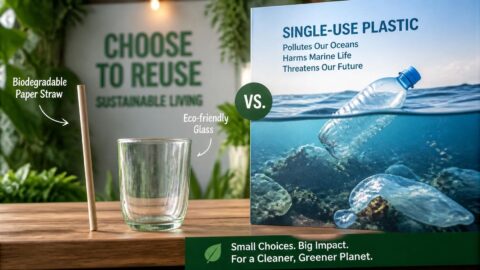
While manufacturing paper straws requires energy and water, their renewable wood pulp base and rapid natural breakdown solve the devastating multi-century persistence and microplastic pollution problems caused by single-use plastic straws.
| Factor | Plastic Straws | Paper Straws |
|---|---|---|
| Raw material | Petroleum-based polypropylene | Wood pulp (often FSC-certified) |
| Decomposition time | 200+ years | Weeks to a few months |
| Marine impact | Breaks into persistent microplastics | Breaks down into natural fibers |
| Recyclability | Rarely recycled (too small/light for most sorting facilities) | Recyclable with paper waste, or compostable |
| Legal status in Germany | Banned since July 2021 | Legal and widely used |
| Manufacturing carbon footprint | Lower per unit, but non-renewable input | Slightly higher per unit, but renewable input |
| Cost per unit (wholesale) | Historically cheaper | Higher, though gap has narrowed |
| Consumer perception | Increasingly negative | Strongly positive, associated with sustainability |
Plastic straws don’t biodegrade — they photodegrade, breaking into progressively smaller fragments under sunlight and mechanical stress until they become microplastics. These particles have been found in ocean sediment, drinking water, and even human blood samples in various global studies. Because plastic straws are lightweight and small, they frequently escape waste-sorting systems and end up in waterways.
Paper straws, by contrast, break down into cellulose fibers and natural byproducts that don’t persist in the environment for centuries. Even in the “worst case” of ending up as litter, a paper straw’s environmental half-life is measured in weeks or months rather than centuries.
This is where the comparison gets more nuanced. Life-cycle analyses show that manufacturing a paper straw can, in some cases, generate a higher carbon footprint per unit than manufacturing a plastic straw, due to the energy and water intensity of paper production. However:
The honest takeaway: paper straws aren’t a perfect environmental solution, but they solve the specific, severe problem of plastic persistence and marine microplastic pollution that plastic straws create.
| Material | Lifespan | Best Use Case | Environmental Trade-off |
|---|---|---|---|
| Stainless steel | Years (reusable) | Home use, bars | Higher upfront resource use, offset by longevity |
| Glass | Years (reusable) | Premium hospitality | Breakage risk, higher manufacturing footprint |
| Bamboo | Months to years | Eco-conscious retail | Requires regular cleaning/drying |
| Paper | Single-use | Foodservice, takeaway | Best balance of convenience + biodegradability |
For high-turnover commercial settings — cafés, fast food, delivery services — reusable straws are often impractical due to hygiene requirements and customer behavior. This is precisely the gap paper straws fill.
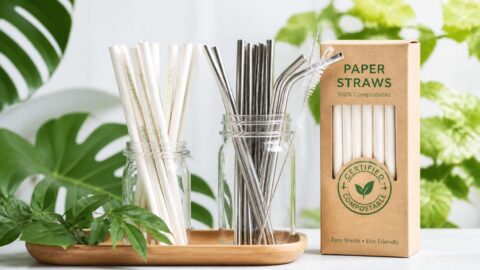
Balancing commercial convenience with ecological responsibility, businesses utilizing a combination of reusable tableware for dine-in patrons and fully biodegradable paper straws for takeaway effectively eliminate single-use plastic waste.
Plastic straws used to win on price alone, often costing a fraction of a cent per unit at scale. Paper straws have historically carried a premium, but the gap has narrowed considerably as EU manufacturing capacity expanded post-2021. Businesses buying in bulk from established European suppliers now see per-unit costs that are far more competitive than in the early transition years.
German consumers are notably sensitive to environmental credibility — a market shaped by decades of strong recycling culture and environmental awareness. Surveys consistently show:
Do paper straws actually decompose faster than plastic in real-world conditions? Yes, significantly. Even without industrial composting, paper straws break down within weeks to months in natural environments, compared to centuries for plastic.
Is manufacturing paper straws worse for the climate than plastic straws? Some life-cycle studies show a higher per-unit carbon footprint for paper production, but this must be weighed against plastic’s near-permanent persistence and marine pollution impact.
Are there hidden costs in switching to paper straws for a business? Aside from unit price, businesses should budget for slightly more frequent straw replacement during long drink service and staff training on proper storage to avoid premature sogginess.
Which alternative is best for a zero-waste café? A combination approach — reusable steel or glass straws for dine-in customers, fully biodegradable paper straws for takeaway — often achieves the best balance.
Paper straws aren’t a flawless environmental silver bullet, but when compared honestly against plastic across the full lifecycle — from raw material to end-of-life outcome — they represent a clear, measurable improvement for reducing plastic pollution, particularly in marine environments. For German businesses navigating both regulation and consumer expectation, paper straws remain the most practical bridge between compliance and genuine sustainability.
