Paper straws marked a turning point in Germany’s shift away from single-use plastics, but they’re just one chapter in a much broader transformation of the drinkware and foodservice packaging industry. As regulations tighten further and consumer expectations evolve, what does the next phase of sustainable drinkware look like for German businesses and consumers?

While paper straws successfully replaced single-use plastics, the future of sustainable drinkware in Germany is moving toward a holistic approach emphasizing reusable systems, advanced materials like seaweed and agricultural fibers, and circular economy models.
Since the 2021 plastic straw ban under the EWKVerbotsV ordinance, Germany’s foodservice sector has broadly normalized paper and alternative-material straws. But regulatory pressure hasn’t stopped there — the EU continues expanding restrictions on single-use packaging more broadly, including provisions in the Packaging and Packaging Waste Regulation (PPWR), which pushes toward reuse targets, recyclability requirements, and restrictions on unnecessary single-use packaging formats across the hospitality sector.
Derived from red algae, seaweed-based straws are edible, fully biodegradable, and leave no residue at all. Still a niche, premium product, but gaining traction in specialty and event catering across Europe.
Made from leftover wheat stalks or other agricultural byproducts, these straws repurpose material that would otherwise be discarded, offering a circular-economy angle that appeals to sustainability-focused brands.
Grown from fungal networks, mycelium materials are being explored for broader foodservice packaging (containers, cutlery) rather than straws specifically, but represent a glimpse into next-generation compostable materials entering commercial testing phases.
Some German venues are piloting deposit-return systems for reusable steel or silicone straws — similar to Germany’s well-established Pfand (bottle deposit) culture — encouraging customers to return straws for washing and reuse rather than discarding them.
While paper straws solved the plastic pollution problem, EU policy direction increasingly favors reduction and reuse over simply swapping one single-use material for another. Expect to see:
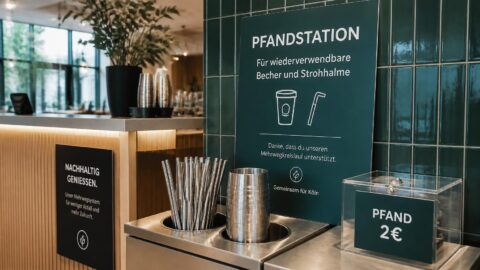
Expanding Germany’s well-established deposit-return culture beyond beverage bottles to include reusable foodservice items like stainless steel straws represents a significant step toward waste reduction in the next phase of sustainable hospitality.
Businesses shouldn’t expect paper straws to become obsolete anytime soon — they remain a practical, compliant, cost-effective solution for high-turnover, takeaway-heavy operations. But forward-looking businesses are already:
| Timeframe | Expected Development |
|---|---|
| Now–2027 | Paper straws remain dominant; PFAS-free certification becomes a stronger differentiator |
| 2027–2030 | Broader PPWR-driven reuse requirements begin reshaping dine-in packaging norms |
| 2030+ | Alternative materials (seaweed, agricultural fiber) may achieve meaningful commercial scale beyond niche use |
Will paper straws eventually be banned or phased out in Germany too? There’s no current indication of a ban on paper straws specifically; regulatory momentum is focused on reducing single-use packaging broadly and encouraging reuse, not eliminating paper as a material.
Are seaweed or wheat straws available at commercial scale yet? They remain relatively niche and often more expensive than paper, typically used by premium or specialty venues rather than high-volume foodservice operations.
Should businesses invest in reusable straw systems now? For dine-in-heavy venues, piloting reusable options alongside paper straws for takeaway is a reasonable way to prepare for tightening reuse-oriented regulation without abandoning proven paper straw reliability.
How can businesses stay ahead of future packaging regulation in Germany and the EU? Monitoring PPWR updates, maintaining supplier certification documentation, and building flexible sourcing relationships that can adapt to new material requirements are the most practical steps available today.
Paper straws aren’t going anywhere in the near term — they remain a reliable, compliant, and increasingly refined solution for Germany’s foodservice sector. But the broader trajectory of EU and German packaging policy points toward reuse-first models and next-generation materials gradually supplementing, rather than replacing, the paper straws that have already reshaped how Germany drinks its coffee, smoothies, and soft drinks.
