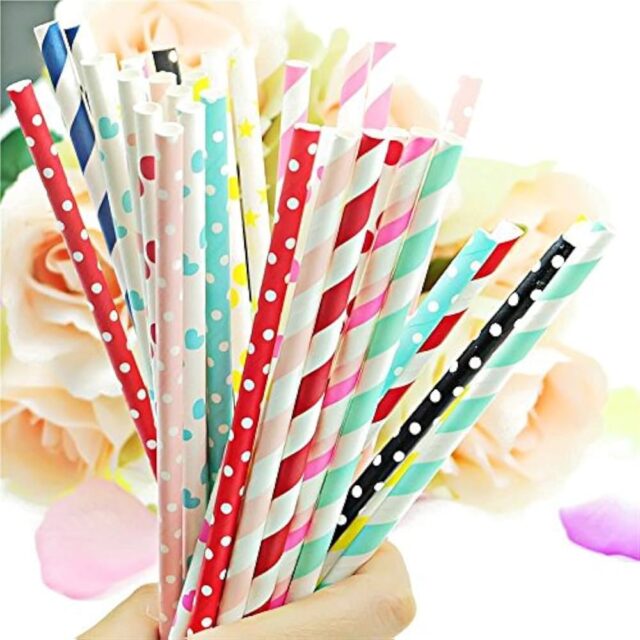
Paper straws became a symbol of environmental responsibility almost overnight. But as the science has caught up with the marketing, the picture has gotten more complicated. Here’s an honest, myth-by-myth breakdown of what’s actually true about paper straws’ environmental credentials.
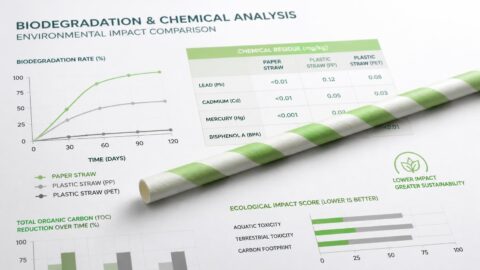
While paper straws became the go-to symbol of sustainability, an honest look at the science reveals a complex picture of environmental benefits, manufacturing tradeoffs, and chemical realities.
Reality: False, in most cases. Multiple peer-reviewed studies, including a 2023 University of Antwerp study of 39 straw brands, found PFAS “forever chemicals” in roughly 90% of paper straw brands tested — a higher detection rate than plastic, bamboo, or glass straws in the same study. These chemicals are believed to be added as a water-resistant coating. While concentrations are generally low, “paper” does not automatically mean “free of synthetic chemicals.” Our full PFAS research breakdown covers the science in depth.
Reality: Partially true, with caveats. Many paper straws are certified compostable under standards like ASTM D6400, and they generally do break down far faster than plastic in composting or marine environments. But composting requires the right conditions — most paper straws need industrial composting facilities to break down efficiently within a reasonable timeframe, and access to industrial composting varies enormously across the US. A paper straw tossed in a regular landfill won’t necessarily decompose meaningfully faster than one there by accident, since landfills are often low-oxygen environments that slow decomposition of all organic material, paper included.
Reality: It’s genuinely mixed. This is one of the most debated points in the paper-vs-plastic literature. Some lifecycle assessments find paper straw production is more energy- and water-intensive per unit than plastic straw production, partly offsetting paper’s end-of-life advantages. Others weight ocean and landfill persistence heavily enough that paper still comes out ahead overall. The honest answer is that the full lifecycle comparison depends heavily on which environmental impacts you weight most (carbon emissions during manufacturing vs. long-term pollution and marine harm), and reasonable researchers disagree on the net result.
Reality: True, but the scale should be kept in perspective. Straws are a real and visible contributor to plastic litter, and switching materials does reduce that specific source. However, straws represent a small fraction of total ocean plastic by volume compared to fishing gear, packaging, and other larger plastic waste streams. The straw-focused campaigns of the late 2010s were effective at raising public awareness partly because straws are a relatable, everyday item — but addressing plastic pollution comprehensively requires far more than straw substitution alone.
Reality: Sometimes true, and worth watching for. Some paper straws — particularly in hygiene-focused foodservice settings — are individually wrapped in a thin plastic sleeve, which does undercut part of the plastic-reduction rationale. This isn’t universal; many paper straws are sold and distributed without any plastic wrapping at all. If minimizing plastic use is your priority, check packaging specifically rather than assuming “paper straw” automatically means “plastic-free product.”
Reality: This misses the point of the debate. Straw material choice in the US has never been purely a legal compliance question — it’s also shaped by corporate sustainability commitments, consumer expectations, and genuine environmental tradeoffs that exist independent of what any particular state or the federal government currently mandates. Businesses and consumers can weigh these factors on their own merits regardless of the current legal minimum, which varies significantly by state.
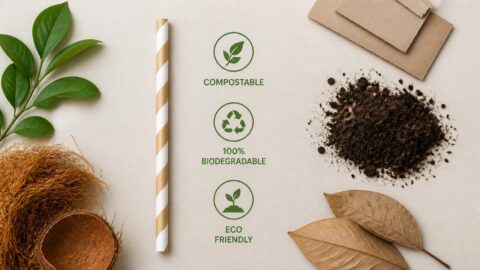
True composting of paper straws typically relies on industrial facilities rather than standard landfills, highlighting the importance of proper disposal pathways.
If your primary concern is marine plastic pollution, paper remains the better single-use choice. If your primary concern is minimizing personal chemical exposure, a reusable stainless steel straw outperforms both single-use options based on current PFAS data. If you’re a business trying to market genuine sustainability rather than green-washing, the strongest move is transparency: disclose PFAS testing results, be specific about compostability requirements (industrial vs. home composting), and avoid vague “eco-friendly” claims that current research doesn’t fully support.
Is a paper straw better for the environment than a plastic one? On marine pollution and biodegradation speed, generally yes. On manufacturing energy/water use and chemical content, the comparison is closer than most marketing suggests.
Can paper straws be recycled? Generally no — once a paper straw has been used with a beverage, it’s considered food-contaminated and typically isn’t accepted in standard paper recycling streams. Composting, where available, is usually the better disposal path.
Do paper straws break down in a regular trash can or landfill? Not efficiently. Most compostable paper straws need industrial composting conditions to break down within a practical timeframe; standard landfill conditions slow decomposition for most organic materials, including paper.
What’s the most eco-friendly straw option overall? Based on current research, a reusable straw (stainless steel showed the cleanest chemical profile in testing) used repeatedly has the lowest overall environmental and health footprint compared to any single-use straw material.