Choosing the right paper straw for a hospitality business isn’t just about compliance with Germany’s plastic straw ban — it’s about matching the straw to the drink, the customer experience, and your brand’s sustainability story. Here’s a practical guide for café owners, restaurant managers, and bar operators sourcing paper straws in the German market.
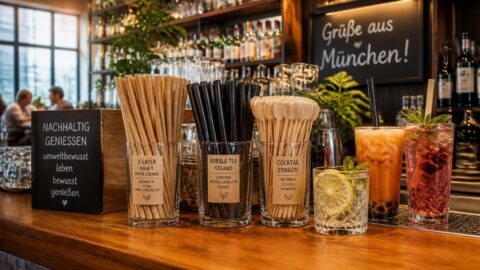
Selecting the right paper straw for your German café or restaurant requires balancing drink compatibility, layer durability, and verifiable sustainability certifications to ensure a seamless customer experience that reinforces your brand’s eco-conscious reputation.
Not every paper straw performs the same way in every beverage. Choosing incorrectly is the number one reason businesses complain about “soggy straw” customer feedback.
| Drink Type | Recommended Straw | Why |
|---|---|---|
| Iced coffee / cold brew | 3-layer, 8mm diameter, coated interior | Needs moderate rigidity and moisture resistance |
| Hot beverages (rare use) | Heat-resistant coated kraft paper | Standard uncoated straws soften almost instantly in hot liquid |
| Smoothies | 4-layer, 10–12mm wide-bore straw | Thicker consistency requires a wider, sturdier tube |
| Bubble tea | Extra-wide 12–14mm straw, reinforced seam | Needs to handle tapioca pearls without collapsing |
| Cocktails | Short 5–6mm stirrer-style straws, often unbleached kraft | Aesthetic matters as much as function for bar presentation |
| Soft drinks / soda | Standard 6mm, 2–3 layer | Carbonation and shorter drink time reduce sogginess risk |
For restaurants and cafés ordering regularly, a few practical tips help avoid waste and storage issues:
Many German cafés use straws as a subtle branding touchpoint. Because paper takes print well, options include:
It’s tempting to default to the cheapest bulk option, but for a customer-facing business, straw quality directly affects perceived drink quality. A straw that collapses halfway through a cold brew creates a negative experience disproportionate to its low cost. Most experienced operators find the best value in mid-tier, 3-layer coated straws — a balance between cost efficiency and reliable performance.
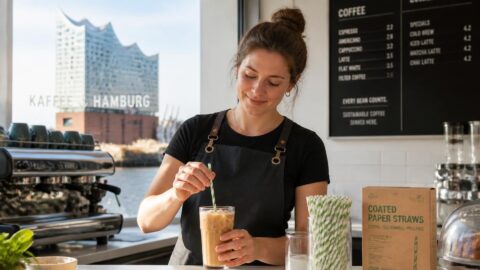
Matching straw specifications—such as 3-layer construction for cold brews or wide-bore designs for smoothies—prevents premature sogginess and ensures customers enjoy a flawless beverage experience from the first sip to the last.
German consumers respond well to specific, verifiable claims rather than vague sustainability language. Instead of simply saying “eco-friendly,” consider messaging such as:
Specificity builds trust, especially given how attuned German consumers are to greenwashing.
How many straws should a mid-sized café order per month? This varies widely by drink volume, but a café serving 150–200 cold beverages daily typically orders in batches of 5,000–10,000 straws monthly, adjusted for storage capacity and shelf stability.
Do darker or printed straws perform differently than plain kraft straws? Printing itself doesn’t usually affect performance, but ink coverage should still use food-safe formulations to avoid any transfer into drinks.
Should restaurants offer both paper and reusable straw options? Many do — offering reusable steel or glass straws for dine-in guests and paper for takeaway strikes a practical balance between sustainability and cost control.
What’s the biggest mistake businesses make when switching to paper straws? Choosing the cheapest option without matching straw specifications (layer count, diameter, coating) to the actual drinks being served — leading to avoidable customer complaints.
The “best” paper straw depends entirely on what you’re serving and who you’re serving it to. Matching straw specifications to drink type, vetting suppliers for genuine certification, and communicating sustainability claims with specificity will help German hospitality businesses turn a regulatory requirement into a genuine brand asset.
