Germany has become one of Europe’s most demanding markets for sustainable packaging, and paper straws sit right at the center of that shift. Since the EU Single-Use Plastics Directive took effect, cafes, bars, hotels, and food-delivery brands across Germany have been racing to replace plastic straws with alternatives that actually break down in nature. But not every “eco-friendly” straw on the market is created equal. Understanding the difference between a biodegradable straw and a fully biodegradable (compostable) straw is the first step toward making a genuinely responsible purchase.
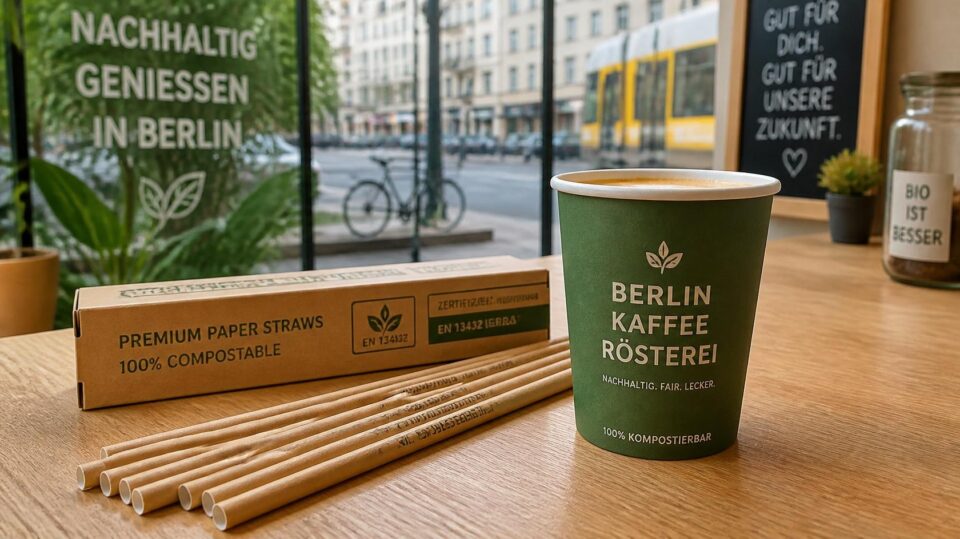
As one of Europe’s most demanding markets for sustainable packaging, Germany requires businesses to look beyond basic eco-labels and understand the critical differences between standard biodegradable and fully certified compostable paper straws
The word “biodegradable” gets used loosely in marketing, but it has a specific meaning: a material that microorganisms can break down into natural substances like water, carbon dioxide, and biomass. The catch is timing and conditions. Some materials labeled biodegradable technically decompose — but only after decades, or only in industrial facilities that most consumers never access.
This is why Germany’s packaging regulators and environmental groups push for clearer standards, often referencing European norms such as EN 13432, which certifies that a product is compostable within a defined timeframe under controlled composting conditions.
| Feature | Biodegradable Paper Straws | Fully Biodegradable Paper Straws |
|---|---|---|
| Breakdown time | Weeks to several months | Typically under 90 days |
| Composting environment | May require industrial composting | Breaks down in home compost or soil |
| Coating/glue used | Sometimes contains partial plastic-based lining (PLA blends) | 100% plant-based adhesives and coatings |
| Certification | Varies, not always third-party verified | Often EN 13432 or OK Compost certified |
| Water resistance | Good, but coating may slow decomposition | Slightly lower, but improved with layered kraft paper |
| Best use case | Cold and hot beverages in commercial settings | Businesses prioritizing zero plastic residue |
The key distinction: all fully biodegradable straws are biodegradable, but not all biodegradable straws are fully biodegradable. A straw might decompose eventually while still leaving behind microplastic traces from its coating — something a genuinely fully biodegradable straw avoids entirely.
Germany has some of the strictest recycling and waste-separation culture in the world (think of the country’s famous Mülltrennung system). German consumers are increasingly savvy about greenwashing, and businesses that mislabel their straws risk both reputational damage and regulatory scrutiny.
For importers and retailers, sourcing straws with verifiable certification isn’t just a compliance checkbox — it’s a competitive advantage. A café that can confidently say “our straws are 100% compostable within 90 days” builds more trust than one using vague claims like “eco-friendly.”
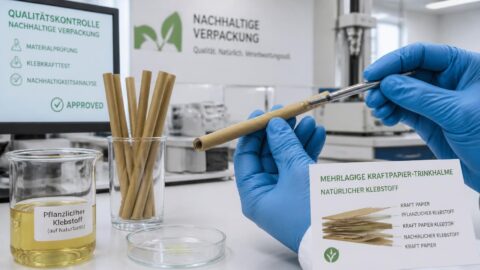
Navigating Germany’s rigorous Mülltrennung waste-separation culture and strict environmental regulations demands fully biodegradable paper straws built with 100% plant-based adhesives and certified under strict European composting norms like EN 13432.
Are paper straws banned or required in Germany? Single-use plastic straws are banned under the EU directive as implemented into German law. Paper, bamboo, and other alternative-material straws are permitted replacements.
Can fully biodegradable straws be composted at home? Many can, especially those certified for home composting rather than only industrial composting — always check the specific certification label.
Do fully biodegradable straws cost more than standard paper straws? Generally yes, by a modest margin, though bulk wholesale pricing has made the gap smaller for businesses buying in volume.
How long do biodegradable paper straws last in a drink? Well-made straws typically remain functional for 45 minutes to over an hour, depending on the drink’s temperature and the straw’s coating quality.
If your business operates in Germany or serves German consumers, the smartest move is to look for straws with third-party compostability certification, transparent supply chains, and clear labeling distinguishing “biodegradable” from “fully biodegradable.” This series will go on to explore manufacturing processes, wholesale sourcing, environmental comparisons, and practical usage tips — everything you need to make an informed, sustainable choice.
