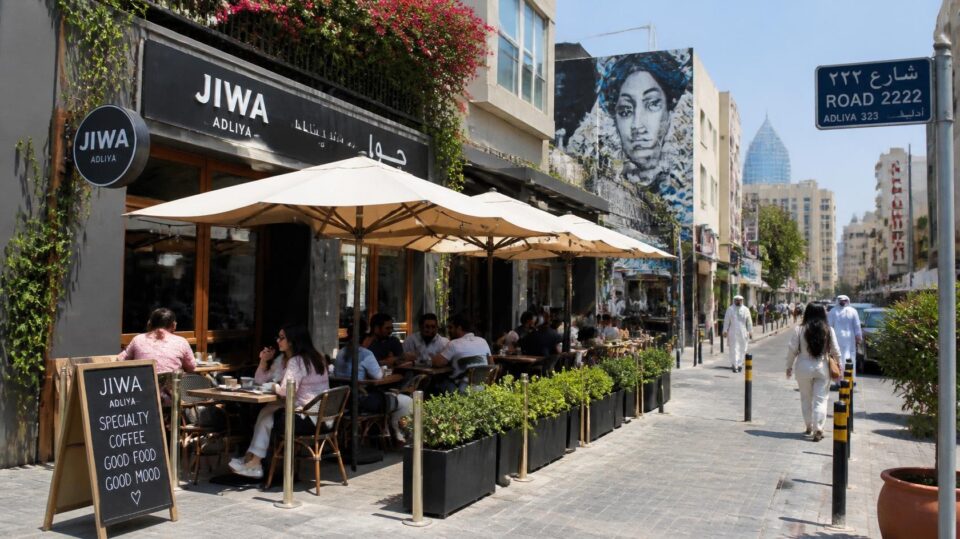
In the quiet morning hours across Manama’s cafes, small operational choices like swapping to paper straws have become an unremarkable part of daily life.
The cafe on the corner in Adliya opens at seven. By seven-fifteen, the espresso machine has settled into its rhythm, and the first regulars are already at their usual tables, laptops open, the smell of cardamom drifting in from the kitchen next door. It’s an ordinary morning in Manama, which is exactly why it’s worth paying attention to.
A woman in her thirties orders an iced karak, extra sweet, no ice — a small contradiction she doesn’t seem to notice is funny. The barista, a young man who’s worked here for two years, reaches under the counter for a straw. It’s paper, slightly off-white, unbranded. He doesn’t think twice about it. Neither does she.
That unremarkable moment is the point.
Three years ago, this same cafe used plastic straws exclusively, the kind that came in a plain cardboard box from a local distributor, ordered without much thought because that’s simply what everyone used. The switch to paper happened gradually, almost invisibly, the way most real changes do. First it was a supplier suggestion — “we’ve got a paper option now, similar price” — and then it was just the default, without any announcement or promotional push.
Bahrain’s food-service scene has been changing this way in pockets across the capital, from the cafes lining Block 338 to the juice stalls near Bab Al Bahrain. Nobody threw a launch party for paper straws. There was no billboard. It happened the way most infrastructure changes happen: quietly, through supply chains and small decisions made by people stocking shelves and placing orders, long before customers noticed anything different.
From the bustling streets of Adliya to the juice stalls near Bab Al Bahrain, the transition toward sustainable practices is happening quietly through everyday supply chain choices.
Back at the corner cafe, the woman with her iced karak takes a sip. The straw holds up fine — this particular supplier makes a double-wall version that doesn’t go soft in cold, sweet drinks, which matters here, where iced beverages make up a large share of daily orders even outside the peak summer heat. She doesn’t comment on it. She’s already back on her laptop.
A few tables over, an older man reading a newspaper — one of the few in the cafe still holding a physical paper rather than a phone — orders a hot Turkish coffee, no straw needed there, and glances briefly at the young couple two tables down sharing a cold-brew, straws upright in tall glasses. He doesn’t think about where those straws came from either. Why would he? That’s not really the customer’s job.
But somewhere behind that ordinary scene is a decision chain: a cafe owner who decided the switch mattered enough to make without being forced into it by law, a distributor who found a supplier that could deliver consistent quality at a price the cafe could absorb without raising menu prices, and a manufacturer somewhere along a longer supply chain who built straws sturdy enough to survive an iced karak without embarrassing anyone at the till.
None of that story is visible in the finished drink. It’s not supposed to be. The whole point of a good straw is that nobody notices it — it just works, quietly, the way infrastructure is supposed to.
By eight-thirty, the cafe is fuller. More laptops open, more iced drinks ordered, more paper straws pulled from the dispenser without a second thought. Manama’s morning continues, unremarkable and specific all at once — a small city figuring out, cafe by cafe, corner by corner, what it wants its ordinary mornings to look like from here on.
Nobody in that cafe will remember this particular Tuesday. That’s fine. The point was never to be memorable. The point was for the straw to simply be there, working, unnoticed — which, in its own quiet way, is exactly what a good sustainability shift is supposed to feel like from the inside.