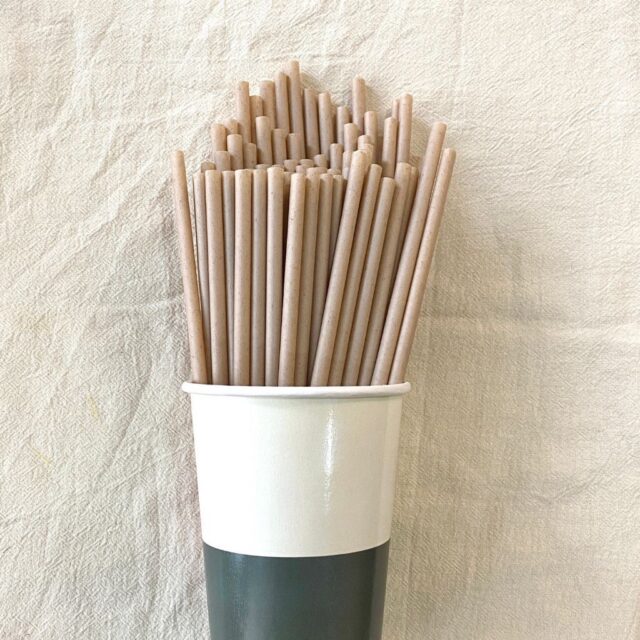
Walk into any Australian hospitality supply catalog today and you’ll find no shortage of plastic straw alternatives — compostable PLA, sugarcane bagasse, paper, even pasta-based straws have all found a place in the post-ban market. Here’s how they actually compare, specifically for Australian businesses navigating state compliance requirements.
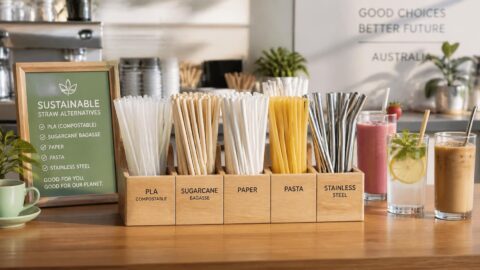
From compostable PLA and sugarcane bagasse to novelty pasta straws and reusable options, Australian hospitality operators have a diverse array of compliant alternatives to navigate the post-plastic landscape.
Covered extensively in earlier guides in this series — plant-based materials engineered specifically to meet AS 4736 (industrial) or AS 5810 (home) compostability standards.
Made from wood pulp, typically compostable and biodegradable, widely used across Australian quick-service and hot beverage settings.
A genuinely novel option gaining attention in the Australian market — straws made from durum wheat pasta, designed to be edible or fully compostable, often marketed for cocktail and premium beverage use.
Available in two forms: reusable solid bamboo straws (washable, multi-use) and less common bamboo-pulp single-use compostable straws.
Reusable options increasingly sold in Australian retail and hospitality settings, particularly for dine-in service where straws can be collected and washed.
| Option | Compliant With State Bans? | Cold Drink Durability | Hot Drink Suitability | Relative Cost (AUD/1,000) | Best Use Case |
|---|---|---|---|---|---|
| Compostable PLA | Yes | High | Low | $25–$42 | General cold drinks |
| Sugarcane bagasse | Yes | High | Medium | $22–$38 | Smoothies, thicker drinks |
| Paper | Yes | Medium | High | $18–$28 | Hot drinks, quick-service |
| Pasta straws | Yes | Medium-High | Low-Medium | $35–$60 | Premium cocktails, novelty presentation |
| Reusable bamboo | Yes (not single-use) | High | High | $150–$300 (one-time, multi-use) | Dine-in, retail sale |
| Metal/silicone | Yes (not single-use) | High | High | $200–$400 (one-time, multi-use) | Dine-in, premium venues |
Pasta straws are a distinctly Australian hospitality trend worth a closer look, given their novelty appeal. Made from durum wheat, they’re naturally compostable and, in some cases, technically edible — a genuine conversation piece for cocktail bars and premium dining. However, they typically cost more than standard compostable options and can soften faster in certain drinks, making them better suited to shorter-service premium cocktails than everyday café use.
| Business Type | Recommended Primary Option | Secondary/Situational Option |
|---|---|---|
| Café (high volume, mostly cold) | Compostable PLA or bagasse | Paper for occasional hot drinks |
| Quick-service (mixed hot/cold) | Paper | Compostable PLA for cold items |
| Pub | Standard PLA | Bagasse for blended drinks |
| Premium cocktail bar | PLA or pasta straws | Reusable metal for repeat dine-in guests |
| Juice bar/smoothie shop | Sugarcane bagasse | — |
| Fine dining restaurant | Reusable metal/glass (washed) | Compostable for takeaway orders |
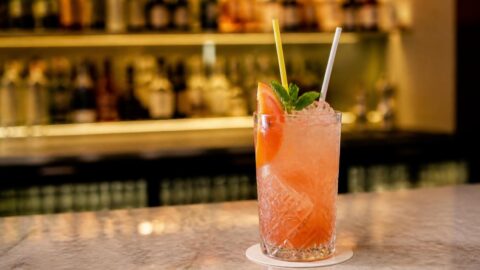
Novelty options like durum wheat pasta straws offer a distinct conversational appeal for premium cocktail bars, complementing compostable PLA and bagasse options across Australia’s diverse beverage scene.
For venues with consistent dine-in traffic and the operational capacity to wash and reuse items, metal or silicone straws can become more cost-effective than single-use compostable options over time, despite a higher upfront cost — provided the venue has reliable washing facilities and low breakage/loss rates. For high-turnover, takeaway-heavy businesses, single-use compostable straws remain the more practical default.
Are pasta straws actually edible, or just compostable? Some pasta straw products are marketed as edible, while others are designed primarily for compostability rather than consumption — check specific product claims, as this varies by manufacturer.
Is paper still a good choice given how many compostable options now exist? Yes, particularly for hot beverages where PLA can soften — paper remains one of the most reliable, cost-effective compliant options for hot drink service specifically.
Do reusable straws actually save money for Australian venues long-term? For venues with consistent dine-in traffic and reliable washing capacity, yes, often within the first year or two of use — though breakage, loss, and hygiene management costs should be factored into that calculation.
Which option has the smallest environmental footprint overall? It depends on the full picture — production footprint, disposal pathway access (FOGO, commercial composting, or general waste), and reuse potential all factor in, making reusable options generally strongest for dine-in settings and compostable materials strongest for high-turnover takeaway use.
There’s no single “best” straw alternative for every Australian business — the right choice depends on your drink menu, service style, and customer volume. Compostable straws remain the most broadly practical, compliant default for most hospitality settings, while paper, pasta, and reusable options each serve specific niches particularly well.
This concludes our 10-part series on compostable straws in Australia — from state-by-state regulations through certification standards, sourcing, cost, composting infrastructure, and full alternative comparisons. Together, these guides offer a complete, Australia-specific picture for any business or consumer navigating the country’s single-use plastic transition.