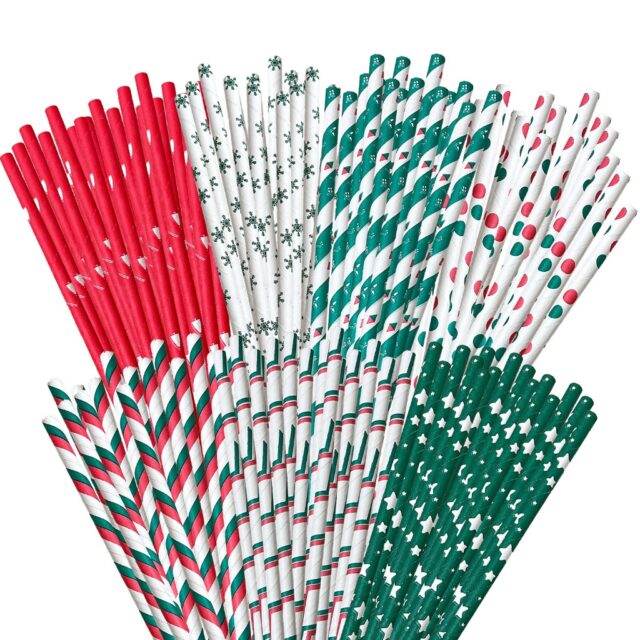
When the European Union’s Single-Use Plastics Directive took effect on July 3, 2021, it didn’t just change what German consumers sipped their drinks through — it triggered a genuine industrial and economic realignment across paper straws manufacturing, packaging supply chains, and hospitality procurement throughout Europe’s largest economy.

The EU’s mandatory shift away from single-use plastic straws sparked a significant industrial and economic realignment across Germany, influencing everything from specialized paper manufacturing innovation to hospitality procurement and international trade logistics.
Germany’s hospitality and F&B sector represents one of the largest markets in the European Union, meaning the mandatory shift away from plastic straws created substantial, near-immediate demand for paper straw manufacturing and import capacity — a market shift significant enough to influence packaging supply chains well beyond Germany’s own borders.
| Stakeholder | Economic Impact |
|---|---|
| Plastic straw manufacturers | Significant demand loss, some pivoted to paper production |
| Paper straw importers | Rapid demand growth, new market entrants |
| German pulp and paper industry | Modest new demand segment within a mature industry |
| Hospitality businesses | One-time transition cost, ongoing higher per-unit expense |
| Packaging logistics companies | New distribution contracts, changed inventory patterns |
Germany maintains one of Europe’s most established pulp and paper industries, and while paper straws represent a relatively small product category compared to the industry’s core packaging and printing paper output, several German and European paper manufacturers did expand into straw-grade paper production following the 2021 ban, positioning specialty paper converters to capture a modest new revenue stream within an otherwise mature, slow-growing sector.
Despite Germany’s domestic paper manufacturing capability, a substantial share of finished paper straws sold in the German market continue to be imported, particularly from manufacturers in China and other Asian markets with established, large-scale straw production infrastructure built up over years of serving global demand. This import dependency has occasionally drawn criticism from environmental groups questioning the net carbon benefit of shipping “sustainable” straws across long distances.
Germany’s broader Packaging Act (Verpackungsgesetz), which requires businesses to register packaging materials with the national Zentrale Stelle Verpackungsregister, created additional administrative considerations for businesses navigating the straw transition, since compliant paper straw sourcing needed to align with this existing packaging registration framework alongside the newer EU single-use plastics requirements.
The mandatory nature of the EU ban created concentrated commercial incentive for material innovation, with German and broader European engineering firms filing patents related to improved paper straw coating technologies, structural reinforcement methods, and manufacturing efficiency improvements in the years immediately following 2021 — activity that likely wouldn’t have occurred at the same pace under a purely voluntary market transition.
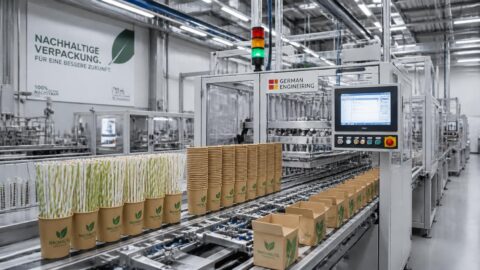
Following the 2021 EU ban, German and broader European paper manufacturers ramped up investment in straw-grade paper production and structural reinforcement technologies, driving a wave of industrial innovation in response to the new mandatory market standards.
Some German regions with existing paper and packaging industry concentration saw modest new investment specifically tied to straw and single-use plastic alternative production, though this remained a small segment compared to Germany’s broader packaging manufacturing output, which spans far larger categories like corrugated cardboard and flexible packaging films.
Did the plastic straw ban create significant new manufacturing jobs in Germany? The impact has been modest rather than transformative — while some paper converters expanded operations, paper straws remain a small product category relative to Germany’s overall packaging manufacturing sector.
Are most paper straws sold in Germany manufactured domestically? No — a substantial share continues to be imported, particularly from Asian manufacturers with established large-scale production infrastructure, despite Germany’s own developed paper industry.
How did the ban affect small hospitality businesses financially? Most independent businesses absorbed a modest but manageable per-unit cost increase, with trade associations providing procurement guidance to ease the transition for smaller operators.
Germany’s paper straw transition illustrates how EU-level environmental regulation can create genuine, measurable economic ripple effects — from manufacturing investment and patent activity to import trade patterns and hospitality sector cost management — well beyond the simple consumer-facing change of straw material. As individual German cities continue navigating this transition within their own distinctive local business environments, this broader economic and industrial context remains essential for understanding the full scope of what a seemingly small packaging regulation actually set in motion across Europe’s largest economy.