Malacca (Melaka), one of Malaysia’s most historically significant cities and a UNESCO World Heritage Site since 2008, presents a distinctive story within Malaysia’s broader paper straws malaysia landscape — one shaped heavily by heritage tourism, Peranakan (Straits Chinese) culinary tradition, and the city’s centuries-old role as a trading port.
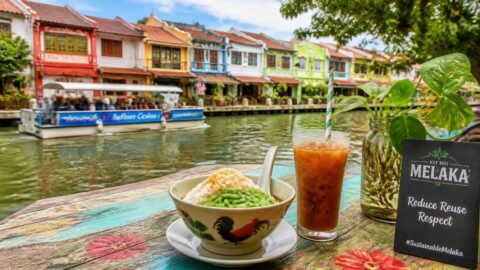
Malacca’s UNESCO World Heritage status and rich Peranakan culinary culture present a distinctive environment for the city’s paper straw transition, where heritage tourism pressures balance with deeply rooted traditions.
Malacca’s economy depends significantly on domestic and international tourists visiting its UNESCO-listed old town, Jonker Street night market, and numerous heritage museums and colonial-era buildings. This tourism dependency has shaped local businesses’ approach to sustainability similarly to patterns seen in other heritage-tourism cities across Southeast Asia, where visible compliance with environmental standards becomes part of maintaining a polished visitor experience.
| Vendor Type | Straw Adoption | Key Factor |
|---|---|---|
| Jonker Street night market stalls | Mixed, gradually increasing | High tourist visibility, cost sensitivity |
| Heritage Peranakan restaurants | Moderate to high | Sit-down dining reduces straw dependency |
| Riverside cafés along Malacca River | High | Tourism-facing, design-conscious |
| Traditional kopitiams (old town) | Slower, gradual | Local customer base, cost concerns |
Malacca’s Peranakan culinary heritage, similar in cultural roots to Singapore’s Joo Chiat and Katong districts, includes traditional beverages like cendol and bandung that carry specific serving customs. Many of these traditional drinks were historically served in ways that minimize straw dependency — cendol in particular is traditionally eaten with a spoon rather than sipped through a straw, given its combination of shaved ice, coconut milk, and rice flour jelly noodles.
Malacca’s riverside promenade, redeveloped significantly over the past two decades into a major tourist attraction featuring boat rides and riverside dining, hosts numerous cafés and restaurants that generally show stronger paper straw adoption than the city’s more traditional inland kopitiams. This pattern reflects a broader trend seen across Malaysia’s tourism-facing waterfront developments, where visibility to international visitors accelerates sustainability-conscious packaging choices.
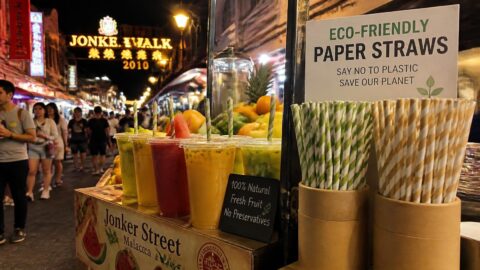
While adoption at Malacca’s bustling Jonker Street night market is gradual due to the informal nature of hawker vending, the visibility of heritage tourism continues to drive a steady shift toward sustainable alternatives.
Malacca’s iconic decorated trishaws, a major tourist attraction in their own right, often operate alongside mobile beverage vendors selling traditional drinks to tourists exploring the old town on foot or by trishaw. These informal, mobile vendors have generally been slower to adopt paper straws than fixed-location businesses, given the practical challenges of managing specialized packaging inventory while operating from a mobile setup.
Malacca shares clear similarities with Penang’s UNESCO heritage tourism dynamics, though Malacca’s Peranakan culinary tradition — with its naturally lower straw dependency through dishes like cendol — creates a somewhat different practical starting point than Penang’s more straw-dependent hawker beverage culture centered around drinks like sugarcane juice.
Do Jonker Street night market vendors use paper straws? Adoption is mixed and gradually increasing, with cost sensitivity and the informal nature of night market vending creating slower uptake than fixed restaurant locations.
Why does Peranakan cuisine have lower straw dependency? Traditional dishes like cendol are eaten with a spoon rather than sipped through a straw, given their thick, textured consistency combining ice, coconut milk, and jelly noodles.
Is Malacca’s heritage status affecting its approach to sustainability? Yes — UNESCO World Heritage designation has increased scrutiny and visibility of local business practices, encouraging more visible compliance with environmental standards as part of maintaining the city’s tourism appeal.
Local heritage preservation groups in Malacca have generally framed sustainable packaging changes as complementary to, rather than in conflict with, the city’s broader heritage conservation mission — arguing that a city built on centuries of trading history and cultural exchange has always adapted its practices while retaining its core identity, making the shift toward paper straws a natural continuation of that same adaptive tradition rather than a disruption to it.
Malacca’s paper straw story reflects how deeply a city’s historical identity can influence even small-scale packaging decisions. Between UNESCO heritage tourism pressure and the naturally lower straw dependency of traditional Peranakan beverage culture, Malacca presents a distinctive case within Malaysia’s broader transition — one where centuries of culinary tradition and modern sustainability expectations continue finding their own particular balance along the historic Malacca River.