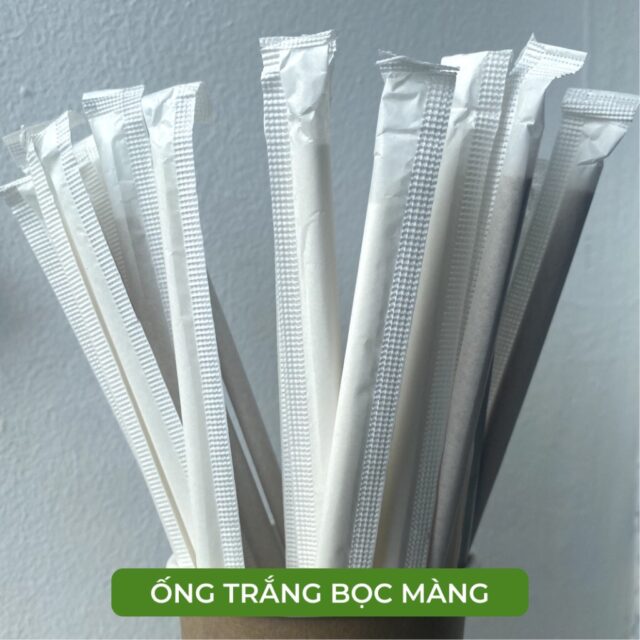
Penang holds a special place in Malaysia’s paper straws malaysia story as one of the earliest and most consistently enforced state-level adopters of plastic straw reduction policies. In a state built almost entirely around its UNESCO World Heritage-listed street food culture, this created a particularly interesting test case for how deeply traditional hawker traditions absorb sustainability regulation.
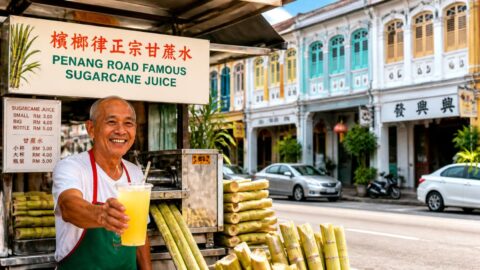
Penang’s UNESCO World Heritage food scene has become one of Malaysia’s most interesting test cases for sustainability, as traditional hawker stalls adapt to some of the country’s earliest and most strictly enforced plastic straw regulations.
Penang’s state government and the Penang Island City Council (MBPP) introduced no-plastic-straw and no-plastic-bag policies for F&B premises earlier and more consistently than many other Malaysian states, positioning Penang as something of a regional leader within the country’s broader patchwork approach to plastic reduction.
| Beverage | Traditional Serving Style | Straw Ban Impact |
|---|---|---|
| Teh tarik | Glass, no straw traditionally | Minimal |
| Cendol | Bowl with spoon | None |
| Air Bandung | Glass or plastic bag | Moderate — bag tradition persists |
| Sugarcane juice | Cup with straw | Significant — direct straw dependency |
| Penang Assam Laksa broth drinks | Bowl | None |
Much like heritage beverage stalls elsewhere in Malaysia and Singapore, Penang’s traditional hawker stalls have long used the plastic bag-and-rubber-band takeaway format for iced drinks, a practice that exists somewhat separately from the straw conversation but faces similar regulatory pressure under the state’s broader single-use plastic reduction policies.
George Town’s UNESCO World Heritage listing, awarded in 2008, has made the city an internationally significant food tourism destination, drawing visitors specifically to experience its street food culture at hawker centres like Gurney Drive and Chulia Street. This tourism status has created a dual pressure on hawker vendors: maintaining authentic traditional practices that tourists come to experience, while also complying with the state’s environmental regulations — a tension not unlike that faced by heritage food districts in other Southeast Asian cities.
Beyond its traditional hawker culture, Penang has developed a notable specialty café scene in recent years, particularly in areas like Lebuh Armenian and the broader George Town heritage zone. These newer, design-conscious cafés have generally embraced paper straws readily, often incorporating sustainability messaging into branding aimed at both local customers and the international tourists drawn to the area’s Instagram-friendly street art and colonial architecture.
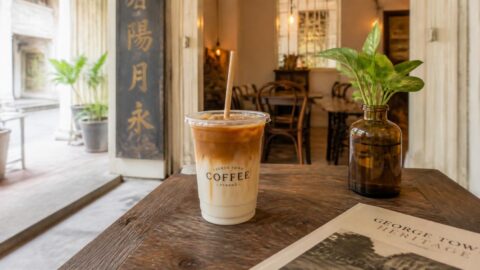
Beyond traditional street food stalls, Penang’s vibrant modern specialty café scene—found throughout George Town’s restored shophouses—has readily adopted paper straws as part of a design-conscious, sustainable branding approach.
Unlike Kuala Lumpur, where adoption has been driven primarily by mall operators and corporate tenants, Penang’s transition has been shaped more directly by formal state and council policy — making it one of the clearer examples in Malaysia of top-down regulation actually reaching deep into traditional, small-scale hawker operations rather than remaining concentrated in malls and corporate districts.
Does Penang have a formal ban on plastic straws? Penang has one of Malaysia’s more established state and council-level no-plastic-straw policies, enforced through the Penang Island City Council, though it operates within Malaysia’s broader decentralized regulatory structure rather than as a single national law.
Do George Town’s famous hawker stalls use paper straws? Many now do, particularly for straw-dependent drinks like sugarcane juice, though adoption has taken time given the deeply traditional nature of the city’s hawker culture.
Why is Penang considered a leader in Malaysia’s plastic reduction efforts? Its earlier and more consistently enforced state-level policies have made it a reference point for other Malaysian states considering similar regulations.
Sustainability advocates and policymakers in other Malaysian states have occasionally referenced Penang’s experience when discussing potential plastic reduction policies of their own, given the state’s relatively long track record and the practical evidence it offers that even deeply traditional, tourism-critical hawker cultures can adapt without losing their essential character or visitor appeal.
Penang’s experience demonstrates that even the most traditional, tourism-dependent food cultures can adapt to sustainability regulation without losing their essential character. As George Town continues balancing its UNESCO heritage status with modern environmental policy, the state’s relatively early and consistent approach to paper straws offers a useful model for other Malaysian states still working through their own, more gradual transitions.