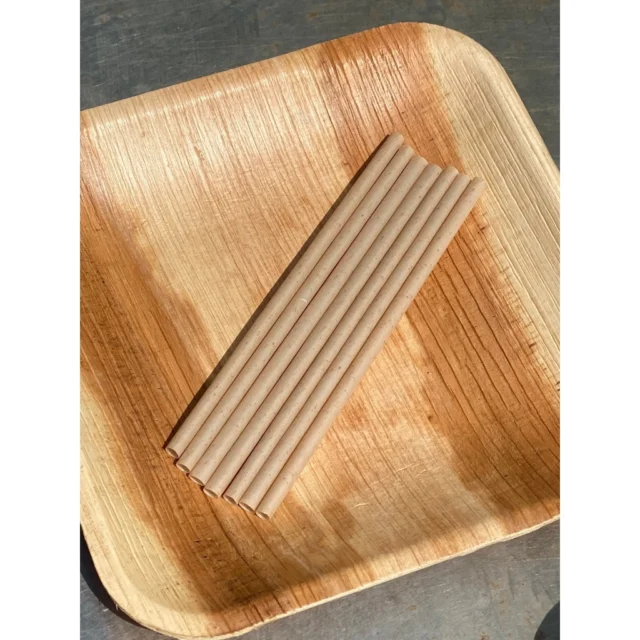
Not all compostable straws are created equal, because not all compostable materials are created equal. Each raw material brings its own strengths, weaknesses, and manufacturing story. Here’s what’s really going on beneath the surface of that straw in your drink.
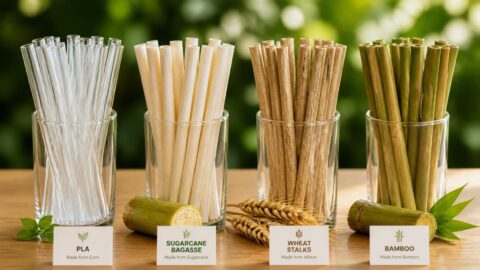
From fermented corn starch and sugarcane bagasse to agricultural wheat stalks and bamboo, each compostable straw material brings distinct raw characteristics, manufacturing processes, and performance strengths.
PLA is the most widely used bioplastic in the compostable straw industry, and for good reason — it looks and feels the closest to conventional plastic.
How it’s made: Corn or cassava starch is fermented to produce lactic acid, which is then polymerized into a plastic-like resin. The result can be extruded, molded, and shaped almost exactly like petroleum-based plastic.
Strengths:
Weaknesses:
Best for: Cold beverages, cocktail straws, retail packaging where a plastic-like look matters.
Bagasse is the fibrous pulp left over after sugarcane stalks are crushed to extract juice — a byproduct that would otherwise be burned or discarded.
How it’s made: The leftover fiber is cleaned, pulped, and pressed into straw shapes, often with a natural binder.
Strengths:
Weaknesses:
Best for: Boba tea, smoothies, milkshakes, and any drink needing extra structural strength.
These straws are made from the literal stalks and husks left behind after wheat or rice harvesting — genuinely “straw” in both senses of the word.
How it’s made: Harvested plant stalks are cleaned, processed into fiber, and formed into straw shapes, sometimes blended with a small percentage of PLA or natural binder for structural integrity.
Strengths:
Weaknesses:
Best for: Brands wanting a visibly “natural” aesthetic; cold and room-temperature drinks.
Bamboo shows up in two very different straw categories, and it’s important not to confuse them.
Reusable bamboo straws: Solid, hollowed bamboo stalks cut into straw lengths — washable and meant for multiple uses, not single-use compostable products.
Bamboo-pulp compostable straws: Bamboo fiber processed into pulp and formed into single-use straws, similar in concept to bagasse or wheat straw products.
Strengths:
Weaknesses:
Best for: Retail/gift sets, home use, eco-brand merchandise (reusable); niche premium single-use applications (bamboo pulp).
| Material | Heat Tolerance | Cold Drink Durability | Texture | Relative Cost | Home Compostable? |
|---|---|---|---|---|---|
| PLA | Low | High | Smooth, plastic-like | $$ | Rarely without certification |
| Sugarcane Bagasse | Medium | High | Slightly matte | $$ | Often yes (check certification) |
| Wheat Straw | Medium | Medium-High | Natural, textured | -$ | Often yes (check certification) |
| Bamboo (reusable) | High | High | Solid, natural | $$$ (one-time) | N/A — reusable |
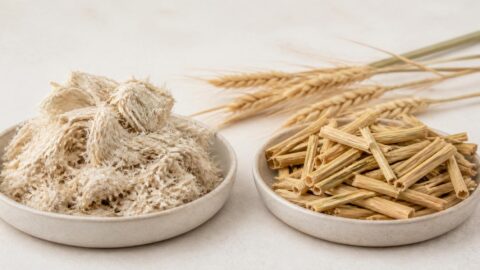
Upcycling agricultural byproducts like sugarcane bagasse and wheat stems transforms waste materials into sturdy, high-performance compostable straws without requiring additional cropland.
Worth watching: PHA is a newer bioplastic produced by microbial fermentation that can biodegrade in a wider range of environments, including some marine settings, unlike standard PLA. It’s currently more expensive and less widely available, but several manufacturers are scaling production as demand for genuinely ocean-safe materials grows.
Which material breaks down fastest? Generally, bagasse and wheat straw break down faster in a broader range of conditions than PLA, which typically needs sustained industrial composting heat.
Is one material more “natural” than another? All four are plant-derived, but bagasse, wheat straw, and bamboo are closer to raw agricultural byproducts, while PLA undergoes more industrial chemical processing to become a plastic-like resin.
Can materials be blended? Yes — many commercial straws blend a small percentage of PLA with plant fiber to improve durability while retaining better compostability than pure plastic.
There’s no single “best” compostable straw material — only the best material for your specific drink, climate, and sustainability goals. Understanding these tradeoffs helps you avoid the common mistake of choosing a straw based on marketing alone.
Up next: how to tell a real compostable certification from a marketing buzzword — the labels and standards you should actually look for.