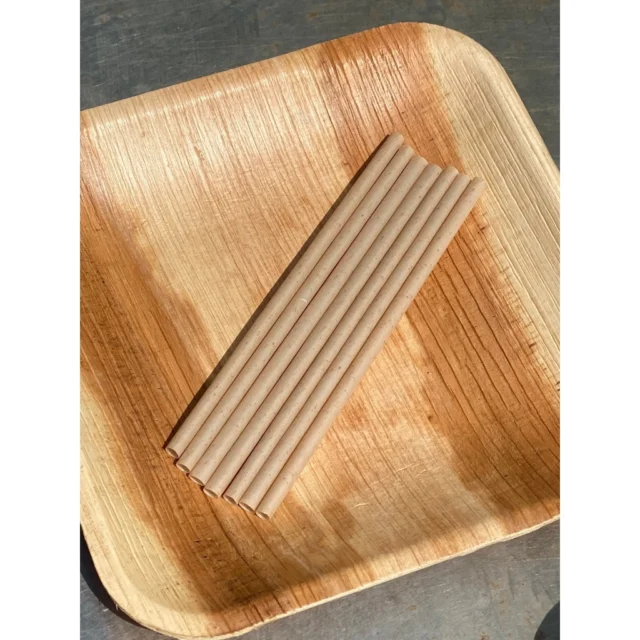
If you operate a hospitality business across multiple Australian states, you already know the frustration: what’s compliant in Queensland might not tick every box in Victoria, and Tasmania’s timeline looks nothing like South Australia’s. This guide breaks down each jurisdiction so you can navigate sourcing compostable straws correctly no matter where you operate.
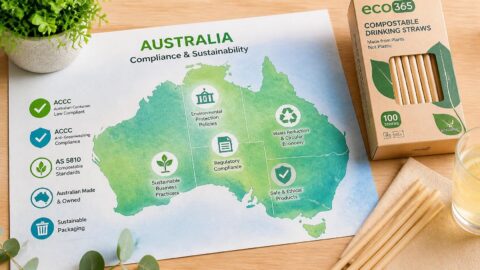
Navigating Australia’s patchwork of state-by-state single-use plastic regulations requires understanding how each jurisdiction’s timeline and compliance rules impact multi-outlet hospitality operations.
South Australia was among the first Australian jurisdictions to move decisively on single-use plastics, banning plastic straws, cutlery, and stirrers as part of its broader single-use plastic products legislation. Compostable and paper alternatives are the standard compliant options, with flexible plastic straws remaining available specifically for accessibility needs.
Key point for businesses: SA’s legislation has been in force long enough that most hospitality venues have well-established compostable straw supply chains — making it one of the more straightforward states to source compliant products in.
Queensland’s single-use plastic legislation covers straws alongside a wide range of other items (cutlery, stirrers, plates, cotton bud sticks, and more). The ban applies broadly across retail and hospitality, with the standard disability access exemption for flexible plastic straws available on request.
Key point for businesses: Queensland’s ban explicitly covers straws made from oxo-degradable and other non-genuinely-compostable “greenwashed” plastics, so businesses need to be especially careful that their chosen compostable straw supplier can back up certification claims.
WA implemented its single-use plastics ban in stages, with plastic straws among the items restricted. As with other states, compliant alternatives include compostable, paper, and reusable options, alongside the standard accessibility exemption.
Key point for businesses: WA’s phased approach means some categories of plastic items were banned before others — always double check current status for any specific product beyond straws if your business also uses other disposable items.
Victoria’s single-use plastics reforms included plastic straws as part of a wider list of banned items. Compostable straws are widely available and commonly used across Melbourne’s dense café and hospitality scene.
Key point for businesses: Victoria’s large hospitality sector, particularly Melbourne’s café culture, has driven strong supplier competition — businesses here often have more local sourcing options than in smaller markets.
NSW’s plastic reduction legislation specifically targets lightweight single-use plastic items, including straws, as part of a broader phased approach to reducing plastic pollution.
Key point for businesses: Sydney and greater NSW’s large hospitality and events industry means demand for compostable straws is high, and bulk sourcing options are generally well developed.
The ACT has maintained a relatively long-standing commitment to reducing single-use plastics, including straws, as part of its broader waste strategy.
Key point for businesses: Canberra’s smaller, more centralized hospitality market means many venues source through similar regional distributors, making compliant sourcing relatively consistent across the territory.
Both Tasmania and the Northern Territory have moved more gradually on single-use plastic restrictions compared to mainland eastern and southern states. Businesses operating here should check current requirements directly with their local environmental authority, as rules can shift.
Key point for businesses: Even without a strict straw-specific ban currently in force in some of these regions, many hospitality businesses are switching voluntarily in line with broader national sustainability trends and customer expectations, similar to markets without formal mandates.
| State/Territory | Straw Ban Status | Accessibility Exemption | Notable Detail |
|---|---|---|---|
| South Australia | In force | Yes | Among the earliest and most established |
| Queensland | In force | Yes | Explicitly targets greenwashed “biodegradable” plastics |
| Western Australia | In force (phased) | Yes | Rolled out alongside other item categories |
| Victoria | In force | Yes | Strong local supplier competition |
| New South Wales | In force (phased) | Yes | Large hospitality/events demand |
| ACT | In force | Yes | Long-standing, consistent approach |
| Tasmania | Evolving | Check locally | Gradual rollout pace |
| Northern Territory | Evolving | Check locally | Gradual rollout pace |
Standardizing on the strictest state’s requirements and choosing certified compostable alternatives across all locations is the most efficient path for multi-state Australian businesses.
Which Australian state was first to ban plastic straws? South Australia was among the earliest movers with its comprehensive single-use plastics legislation.
Do all states allow flexible plastic straws for accessibility needs? Most state bans include this exemption, though the specific administrative requirements can vary, so it’s worth confirming details for each jurisdiction your business operates in.
Is it easier to just use compostable straws everywhere, regardless of state requirements? For multi-state businesses, standardizing on certified compostable straws across all locations is often the simplest way to stay compliant everywhere without managing state-specific product variations.
How often do these regulations change? Single-use plastics legislation across Australian states has continued to evolve and expand in scope over recent years, so periodic review of current rules is a sensible practice for any hospitality business.
Navigating Australia’s state-by-state plastic straw regulations can feel complex, but the underlying pattern is consistent: certified compostable straws, paired with a properly managed accessibility exemption, keep most businesses compliant across nearly every jurisdiction. Standardizing your approach nationally, rather than reinventing it state by state, is the most efficient path forward.
Next in this series: what Australia’s AS 4736 compostability standard actually means, and how to verify a supplier’s certification claims.