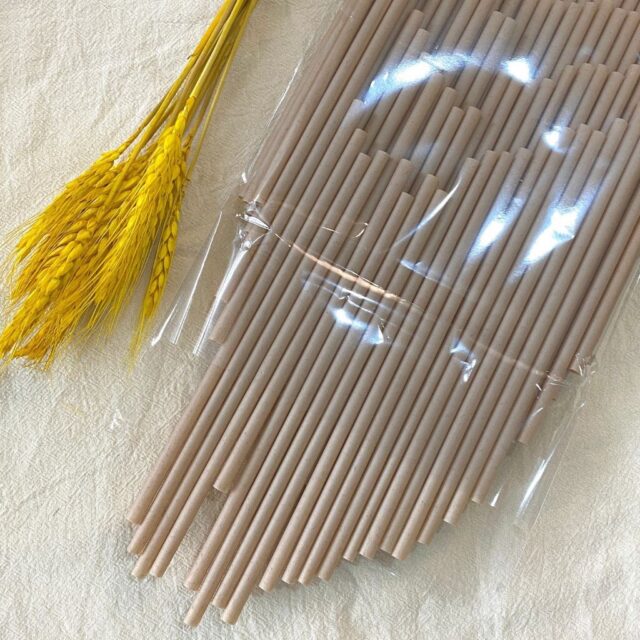
With plastic straws banned across most Australian states, the question for hospitality businesses has shifted from “should we switch” to “how do we budget for it.” Here’s a realistic, Australia-specific look at the numbers behind compostable straws.
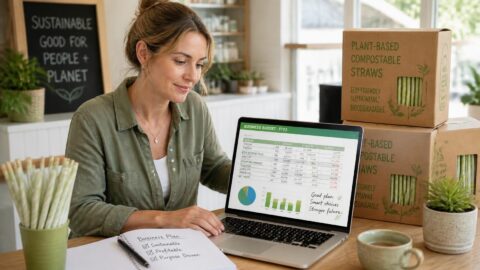
With single-use plastic straws banned across most Australian states, navigating AUD pricing, GST, and freight logistics helps hospitality operators turn regulatory compliance into a manageable, budgetable line item.
| Straw Type | Price per 1,000 Units (AUD) | Price per Straw |
|---|---|---|
| Paper (uncoated) | $18–$28 | $0.018–$0.028 |
| Compostable PLA | $25–$42 | $0.025–$0.042 |
| Sugarcane bagasse | $22–$38 | $0.022–$0.038 |
| Wheat straw fibre | $28–$45 | $0.028–$0.045 |
Since conventional plastic straws are no longer legally available for general hospitality use in most states, the more relevant cost comparison for most businesses today is between different compliant materials, not compostable versus plastic.
Standard GST applies to compostable straw purchases in Australia, whether sourced locally or imported, and should be factored into your landed cost calculations alongside any applicable customs duties for imported goods. Businesses registered for GST can typically claim input tax credits on these purchases as part of normal business expense processing — worth confirming with your accountant as part of standard BAS reporting.
| Order Volume | Typical Price Reduction |
|---|---|
| Under 5,000 units | Baseline pricing |
| 10,000–50,000 units | 10–20% lower per unit |
| 100,000+ units | 20–35% lower per unit |
| 500,000+ units (chain/franchise level) | 30–45% lower per unit |
Australia’s geographic spread means freight costs between states can meaningfully affect landed pricing — a Sydney-based supplier may offer different effective pricing to a Perth venue than to one in regional NSW, so it’s worth getting quotes that reflect delivery to your actual location.
Assume a 4-venue café chain across Victoria uses 25,000 straws per month combined:
| Straw Type | Monthly Cost (AUD) | Annual Cost (AUD) |
|---|---|---|
| Paper | ~$550 | ~$6,600 |
| Sugarcane bagasse (bulk) | ~$700 | ~$8,400 |
The annual difference in this example is roughly $1,800 across four venues — around $450 per venue per year, a modest, budgetable figure for most established hospitality operations.
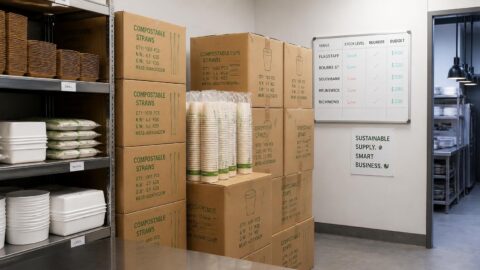
Consolidating orders across multiple venues and leveraging group purchasing agreements allows Australian hospitality businesses to access lower bulk tiers and offset interstate freight costs.
Is there a cost difference between states due to differing regulations? The straw material cost itself is largely consistent nationally, though freight costs to reach your specific state or region can vary, particularly for businesses in regional or remote areas further from major distribution hubs.
Are there any government grants or rebates available to help Australian businesses transition? Some state and local government sustainability grant programs have supported small business transitions away from single-use plastics in the past; checking with your state’s business support services or industry association is worthwhile, as available schemes change over time.
Is it worth stockpiling compostable straws to avoid future price increases? Generally not recommended beyond normal operational reserves — compostable materials can have shorter recommended shelf lives than conventional plastic, so over-ordering risks product degradation before use.
The cost of compliant compostable straws in Australia is a manageable, budgetable business expense rather than a major financial barrier — particularly once GST treatment, bulk purchasing, and group buying strategies are factored into the full picture. For most hospitality businesses, proper planning turns this from a reactive compliance cost into a straightforward line item.
Next in this series: a practical switching guide tailored to Australian cafés, pubs, and cocktail bars.