“Compostable straws cost more” is the single biggest objection businesses raise before switching. It’s true — but the gap is narrower than most people expect, and there are real strategies to manage it. Here’s a complete financial breakdown.

While compostable straws carry a higher per-unit price than conventional plastic, strategic bulk ordering, usage policies, and avoided packaging fees make the financial transition far more manageable than many businesses expect.
Prices vary by material, order size, and supplier, but here’s a realistic ballpark for standard-size straws in 2026:
| Straw Type | Approx. Cost per 1,000 Units | Approx. Cost per Straw |
|---|---|---|
| Conventional plastic | $8–$15 | $0.008–$0.015 |
| Paper (uncoated) | $12–$20 | $0.012–$0.02 |
| PLA compostable | $18–$30 | $0.018–$0.03 |
| Sugarcane bagasse | $15–$28 | $0.015–$0.028 |
| Wheat straw | $20–$35 | $0.02–$0.035 |
At small order volumes, compostable straws can cost roughly 1.5 to 2.5 times more than conventional plastic. That gap shrinks meaningfully at bulk order sizes.
| Order Size | Typical Price Reduction vs. Small Orders |
|---|---|
| Under 5,000 units | Baseline (highest per-unit cost) |
| 10,000–25,000 units | 10–20% lower per-unit cost |
| 50,000–100,000 units | 20–35% lower per-unit cost |
| 250,000+ units | 30–45% lower per-unit cost, approaching plastic pricing |
Large chains and distributors that commit to high-volume, recurring orders often close most of the price gap with plastic — sometimes down to just a few cents per hundred straws.
Beyond the per-unit price, factor in:
The cost conversation isn’t one-directional. Consider:
Assume a café uses 15,000 straws per month:
| Straw Type | Monthly Cost | Annual Cost |
|---|---|---|
| Conventional plastic | ~$150 | ~$1,800 |
| Sugarcane bagasse (bulk) | ~$225 | ~$2,700 |
| PLA (bulk) | ~$270 | ~$3,240 |
The annual difference in this example is roughly $900–$1,440 — often less than the cost of a single piece of kitchen equipment, and frequently offset by marketing value, avoided plastic fees, or reduced usage from an “on request” policy.
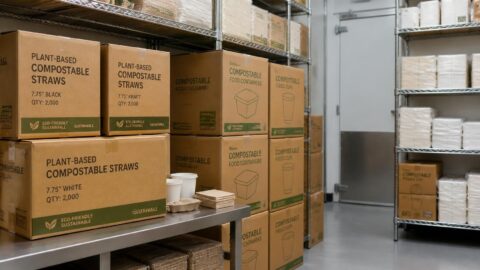
Scaling up to bulk order volumes significantly closes the price gap between conventional plastic and certified compostable alternatives.
Will switching to compostable straws hurt my profit margins? For most small-to-mid-size businesses, the added cost is measured in hundreds to a few thousand dollars annually — manageable with modest pricing adjustments, bulk ordering, or usage reduction strategies.
Are there grants or incentives for switching to compostable products? Some cities and states offer small business sustainability grants or rebates tied to single-use plastic reduction — worth checking with local economic development or environmental offices.
Is it cheaper to switch gradually or all at once? Gradual switching (starting with cold drinks, for example) lets you manage cash flow and test supplier quality before committing to a full-menu transition.
Compostable straws do cost more than plastic — but the real-world gap, especially at bulk order volumes, is often smaller than businesses assume, and can be partially or fully offset through usage policies, bundled ordering, and avoided plastic fees. Budgeting properly turns “compostable straws are too expensive” from an assumption into a manageable line item.
Next: the common myths about compostable straws that even well-meaning businesses and consumers still believe.