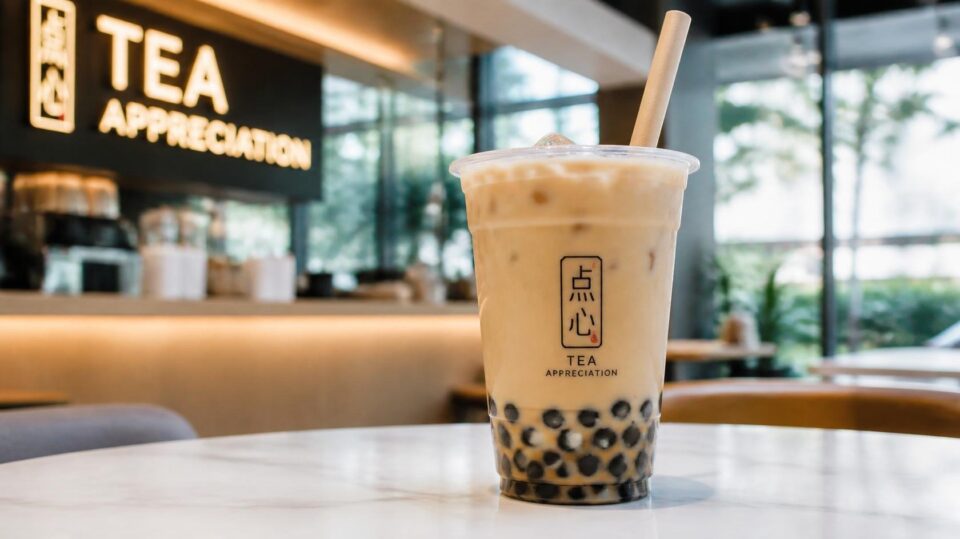
Few food trends have captured Singapore quite like bubble tea. From queues outside LiHO and Koi to newer arrivals like Tiger Sugar and Xing Fu Tang, Singapore reportedly has one of the highest densities of bubble tea shops per capita in the world. But this beloved drink presents a packaging challenge few others share: sipping chewy tapioca pearls through an eco-friendly straw.
Singapore’s massive bubble tea industry faces a unique packaging challenge: finding eco-friendly, wide-bore paper straws capable of handling chewy tapioca pearls.
| Feature | Standard Paper Straw | Boba-Grade Paper Straw |
|---|---|---|
| Diameter | ~6mm | 10–13mm |
| Wall thickness | Thin | Reinforced, tighter winding |
| Coating | Basic food-safe | Wax or PLA-based, moisture resistant |
| Works with tapioca pearls | No | Yes |
| Typical cost | Lower | Higher |
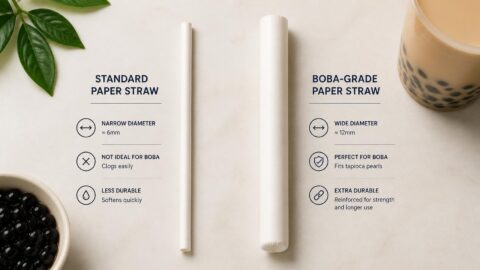
Transitioning from standard narrow straws to reinforced, wide-format boba-grade paper straws allows bubble tea lovers to enjoy toppings without structural collapse.
Bubble tea orders typically generate:
Some sustainability advocates argue focusing only on straws misses this bigger picture — pushing several brands to explore cup and lid alternatives too, alongside small discounts for customers who bring reusable cups and straws.
Why can’t bubble tea use normal paper straws? Standard straws are too narrow and structurally weak for thick tapioca pearls or popping boba, causing them to collapse mid-drink.
Are boba-specific paper straws more expensive? Yes — lower production volumes and reinforced construction make them pricier than standard drink straws.
Do any Singapore bubble tea brands use reusable straws? Some smaller, independent shops offer stainless steel or silicone wide straws for dine-in customers as an alternative to single-use options.
Expect further innovation in wide-format sustainable straws — potentially bamboo fiber or sugarcane bagasse materials offering better durability than standard wood pulp paper. For an industry central to Singapore’s food identity, solving the straw challenge means preserving the very drinking experience that made bubble tea a phenomenon in the first place.