Behind every paper straw served in a Singaporean café, hawker stall, or hotel lies a supply chain question that has become increasingly important to the city-state’s broader green economy ambitions: where do these straws actually come from? For years, the overwhelming majority of paper straws used in Singapore were imported, primarily from manufacturers in China, Vietnam, and Taiwan. But a small, growing cohort of local startups and social enterprises has begun working to build a more homegrown, regionally-sourced paper straw supply chain.
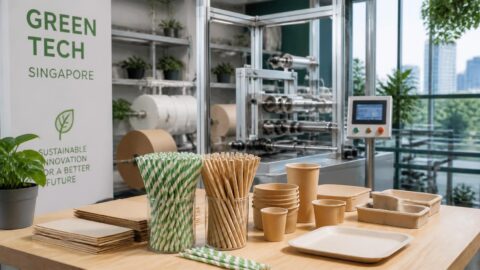
As Singapore’s green economy expands, a small cohort of local startups and social enterprises is working to build a homegrown, regionally sourced paper straw supply chain.
Singapore’s position as a global trade and logistics hub has historically made importing finished paper straw products relatively straightforward and cost-effective, which is part of why local manufacturing didn’t emerge as a priority earlier. However, as sustainability-conscious businesses and consumers began scrutinizing the full lifecycle impact of paper straws — including the carbon footprint of long-distance shipping — interest in more localized, shorter supply chains has grown considerably.
Several Singapore-based green economy startups have identified this gap as a business opportunity, arguing that a “sustainable” straw shipped thousands of kilometers loses much of its environmental advantage over plastic once transportation emissions are factored into the full lifecycle analysis. This argument has resonated with a segment of environmentally sophisticated Singaporean consumers and businesses who increasingly ask not just what a product is made from, but where and how it was made.
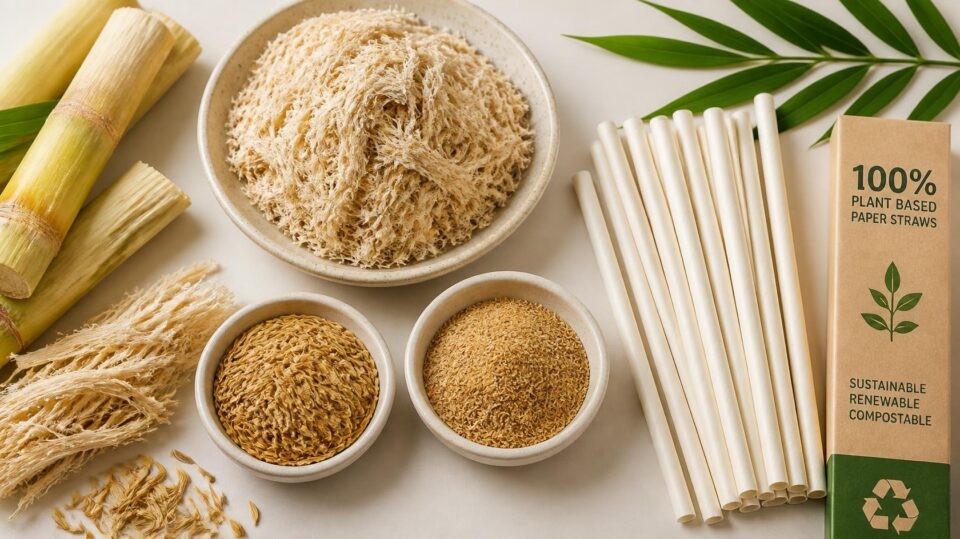
One of the central challenges facing any Singapore-based paper straw manufacturer is the country’s near-total lack of domestic pulp or paper production, given its limited land area and absence of forestry industries. This has pushed local startups toward creative sourcing strategies, including partnerships with regional agricultural producers in Malaysia and Indonesia to source sugarcane bagasse, rice husk fiber, and other agricultural byproducts that can be processed into straw-grade paper closer to Singapore than traditional pulp-exporting countries.
Some ventures have explored using recovered paper waste from Singapore’s own recycling streams as a feedstock, tying straw production directly into the city-state’s broader circular economy ambitions and reducing dependence on virgin material imports altogether.

Facing a near-total lack of domestic pulp production, Singapore startups utilize regional agricultural byproducts like sugarcane bagasse and rice husk fiber.
Singapore’s Economic Development Board and Enterprise Singapore have both shown increasing interest in supporting green manufacturing ventures as part of the broader Singapore Green Plan 2030, which includes goals around green jobs and sustainable industry development. While large-scale paper straw manufacturing remains a small niche within this broader green economy push, several startups in the space have successfully accessed grant funding, incubator support, and pilot program opportunities aimed at nurturing early-stage sustainability ventures.
| Support Type | Provider |
|---|---|
| Grant funding | Enterprise Singapore |
| Green manufacturing goals | Singapore Green Plan 2030 |
| Incubator programs | Local polytechnics and universities |
| Pilot program access | Economic Development Board initiatives |
Local business incubators focused on sustainability, including several affiliated with Singapore’s polytechnics and universities, have also supported small teams developing prototype straw manufacturing equipment suited to smaller batch, localized production rather than the massive industrial scale typical of overseas manufacturers.
The central challenge facing Singapore’s homegrown paper straw manufacturers remains cost competitiveness. Established overseas manufacturers benefit from economies of scale built over years of high-volume production, making it difficult for smaller Singaporean ventures to match pricing on a like-for-like basis. Local startups have generally responded by targeting premium market segments — boutique cafés, hotels, and businesses specifically seeking supply chain transparency and local sourcing credentials — rather than competing directly on price with mass-market importers serving hawker centres and large chains.
Several ventures have also explored business-to-business partnerships directly with F&B brands seeking to include “locally made” or “regionally sourced” claims in their own sustainability marketing, creating a mutually reinforcing relationship between straw manufacturers and the businesses that use their products.
Are locally made paper straws cheaper than imported ones in Singapore? Generally no — local production currently costs more due to smaller scale, so most local manufacturers target premium, sustainability-focused customers rather than competing on price.
What raw materials do Singapore-based straw makers use? Common sources include sugarcane bagasse and rice husk fiber sourced regionally, along with recovered paper waste from local recycling streams, since Singapore has no domestic pulp production of its own.
Does the Singapore government support local paper straw manufacturing? Indirectly — through broader green manufacturing grants, incubator support, and Green Plan 2030 initiatives, rather than straw-specific programs targeting this niche alone.
How do local startups compete with large overseas manufacturers? By focusing on premium, transparency-focused customers rather than competing on price, and by forming direct partnerships with F&B brands that value locally sourced or regionally made claims.
While paper straw manufacturing remains a tiny segment within Singapore’s broader green economy ambitions — which span far larger sectors like green finance, renewable energy, and sustainable urban planning — the emergence of local manufacturers reflects a broader trend of Singaporean entrepreneurs identifying niche opportunities within global sustainability supply chains.
As Singapore continues positioning itself as a regional hub for green innovation, homegrown paper straw manufacturers offer a small but tangible example of how sustainability commitments can translate into genuine local business opportunities, even within a country facing structural constraints like limited land and raw material access. For now, these ventures remain modest in scale, but they represent an instructive case study in how a land-scarce, trade-dependent economy can still carve out a role in increasingly localized, sustainability-driven supply chains.