Walk into any café or bar in Germany today, and you’ll notice paper straws come in far more variety than the plain beige tubes many people picture. From striped designs to jumbo bubble-tea sizes, the paper straw market has diversified significantly since the plastic straw ban. Here’s a full breakdown of the types available and when each makes sense.
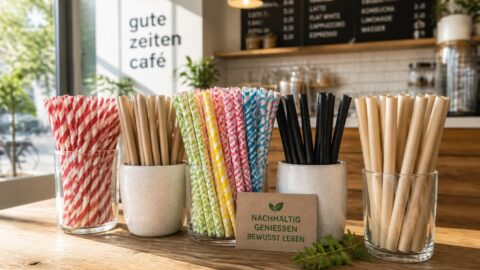
Moving far beyond the plain beige tubes of early compliance years, today’s paper straw market offers an extensive variety of diameters, lengths, colors, and patterned designs tailored to every beverage type, from delicate cocktails to extra-thick bubble teas.
| Diameter | Common Name | Typical Use |
|---|---|---|
| 5–6mm | Cocktail/stirrer straw | Mixed drinks, garnish presentation |
| 6–8mm | Standard straw | Soft drinks, water, juice |
| 8–10mm | Cold brew/iced coffee straw | Iced coffee, iced tea |
| 10–12mm | Smoothie straw | Thicker blended drinks |
| 12–14mm | Bubble tea/jumbo straw | Drinks with tapioca pearls or fruit chunks |
Choosing the wrong diameter is one of the most common sourcing mistakes — a standard 6mm straw simply cannot handle bubble tea pearls, no matter how sturdy the paper layers are.
Natural brown color, no bleaching or dyes. Popular for brands emphasizing a “raw,” minimal-processing aesthetic — often paired with zero-waste or farm-to-table branding.
Dyed using food-safe pigments in solid tones — white, black, pastel shades, or bold brand colors. White straws often use a light bleaching process, which some eco-conscious brands avoid in favor of unbleached alternatives.
Classic candy-stripe designs remain popular for casual dining, ice cream parlors, and children’s menus. Printing happens before the paper is wound into tube form, so pattern alignment consistency is a mark of manufacturing quality.
Used in premium cocktail presentation and event catering — though buyers should confirm that foil accents don’t compromise compostability certification, since metallic inks sometimes use different formulations than standard food-safe dyes.
Printed with a business’s logo, tagline, or seasonal design. Common in wholesale orders for chains and franchises seeking consistent brand presentation across locations.
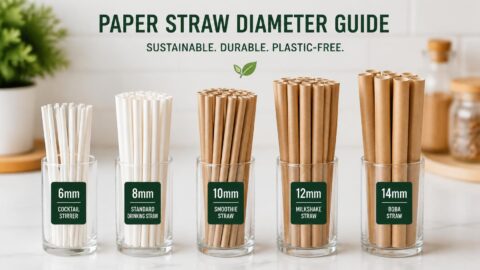
Matching the correct straw diameter—such as wide 12mm to 14mm bores for tapioca pearls or 3-layer 8mm tubes for iced coffee—is essential to preventing operational bottlenecks and ensuring a flawless beverage experience.
| Coating Type | Water Resistance | Compostability Impact |
|---|---|---|
| Uncoated | Lowest | Fastest, cleanest compostability |
| Bio-lacquer coated | Moderate to high | Minimal impact, designed to still compost |
| Wax coated | High | Can reduce compostability certification eligibility |
Are colored/printed paper straws still compostable? Generally yes, provided the inks used are food-safe and water-based, though it’s worth confirming with the supplier that printing doesn’t affect the product’s compostability certification.
What straw size is best for bubble tea specifically? Most bubble tea shops use 12–14mm diameter straws to accommodate tapioca pearls without clogging or collapsing.
Do unbleached straws perform differently than white/bleached ones? Performance is largely similar; the difference is primarily aesthetic and relates to processing rather than structural strength.
Can businesses order a mix of sizes in one wholesale order? Most manufacturers allow mixed-size orders, though minimum order quantities may apply per size/style combination rather than across the whole order.
Beyond everyday menu needs, many German venues rotate straw designs seasonally to match promotions or holidays:
Businesses running multiple straw types simultaneously — say, jumbo bubble tea straws alongside standard drink straws — should keep a few sourcing practicalities in mind:
The paper straw market has evolved well beyond a single generic product. Matching diameter, length, coating, and design to your specific drink menu and brand identity ensures customers get a straw that performs well and reinforces your business’s overall presentation — a small detail that adds up to a better customer experience.
