If you’ve shopped for eco-friendly foodservice supplies recently, you’ve probably noticed the word “compostable” popping up next to straws, cups, and takeout containers everywhere. But what does it actually mean — and how is a compostable straw different from a “biodegradable” or “eco-friendly” one? This guide breaks it all down.
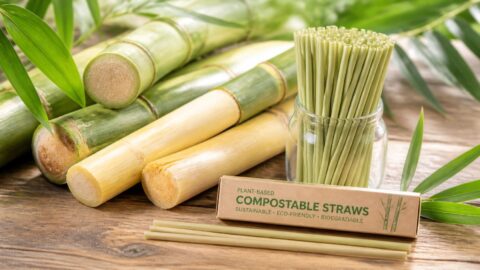
Designed to break down naturally under specific composting conditions, certified compostable straws offer a sustainable alternative to single-use plastics without leaving toxic residue behind.
A compostable straw is a product designed to break down into water, carbon dioxide, and biomass under specific composting conditions — without leaving toxic residue behind. Unlike plastic, which lingers in landfills and oceans for centuries, a certified compostable straw is engineered to disappear as part of a natural biological cycle.
The key word here is certified. Not every straw labeled “eco” or “green” is genuinely compostable. True compostability is verified through standardized lab testing (more on certifications in a later article), which confirms the material breaks down within a set timeframe and doesn’t leave microplastics or harmful chemicals in the resulting compost.
Compostable straws are manufactured from renewable, plant-based materials instead of petroleum. The most common raw materials include:
Each material has a different feel, rigidity, and heat tolerance, which is why manufacturers often blend them to hit the right balance of durability and compostability.
| Environment | Approximate Breakdown Time |
|---|---|
| Industrial composting facility | 45–180 days |
| Home compost bin (optimal conditions) | 3–6 months |
| Home compost bin (average conditions) | 6–12 months, may not fully break down |
| Landfill (low oxygen) | Very slow, similar to plastic in some cases |
| Ocean or waterway | Varies widely; not guaranteed unless marine-certified |
This table highlights something important: not all compostable straws break down the same way everywhere. A straw certified for industrial composting won’t necessarily disappear quickly in your backyard compost pile, and it almost certainly won’t dissolve in the ocean unless specifically certified for marine biodegradability.

Manufactured from renewable, plant-based resources like PLA, sugarcane bagasse, wheat straw, and bamboo pulp, compostable straws help reduce reliance on petroleum-derived plastics.
A single plastic straw can take up to 200 years to decompose, slowly fragmenting into microplastics that enter waterways, soil, and even the food chain. Compostable straws interrupt that cycle in three key ways:
Q: Will a compostable straw go soggy in my drink? Quality varies by brand and material, but most well-made PLA or bagasse straws hold up for 1–4 hours in cold drinks — comparable to paper straws, and often sturdier.
Q: Can compostable straws go in my regular recycling bin? No. Mixing compostable materials into plastic recycling streams contaminates the batch. They belong in a compost stream or, if unavailable, the general trash.
Q: Are compostable straws more expensive than plastic? Typically yes, though the price gap has been narrowing as production scales up and more manufacturers enter the market.
Q: Do compostable straws work with hot drinks? Some PLA straws soften in very hot liquids. For hot beverages, look specifically for heat-resistant compostable straws made from bagasse or paper-composite blends.
Understanding the basics is the first step. In the next guide, we’ll compare compostable straws side-by-side with biodegradable and paper alternatives so you can choose the right option for your needs.