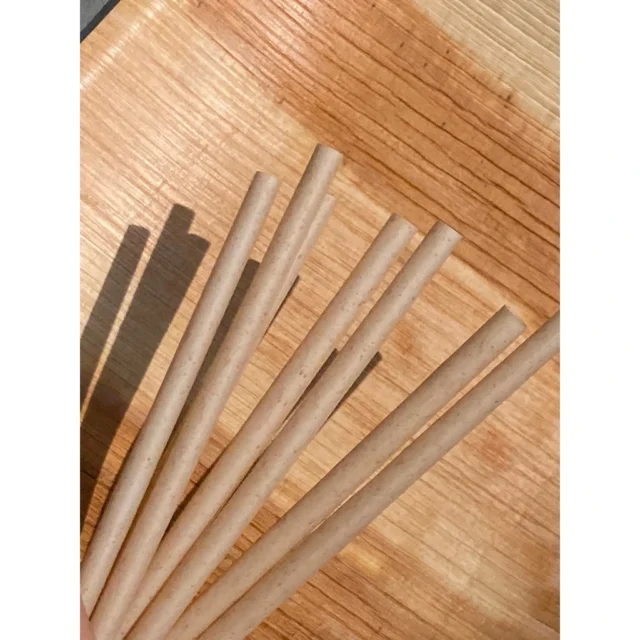
Walk through any hawker centre, bubble tea kiosk, or café in Singapore today and you’ll likely spot a straw that looks a little different from the plastic ones of a decade ago — slightly matte, sometimes beige or brown, occasionally printed with a “compostable” or “plant-based” label. This shift isn’t random. It’s tied directly to Singapore’s broader push to cut single-use waste, and understanding what these straws actually are matters for both businesses and consumers navigating the change.
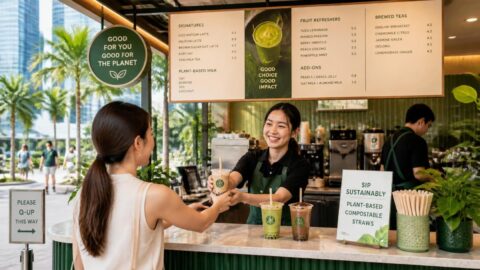
From hawker centres to trendy bubble tea kiosks, plant-based compostable straws have become a visible fixture across Singapore’s vibrant F&B scene as the nation drives forward under the Zero Waste Masterplan.
A compostable straw is made from plant-based materials — most commonly PLA (derived from fermented corn or cassava starch), sugarcane bagasse, wheat straw fibre, or bamboo pulp — engineered to break down into water, carbon dioxide, and biomass under the right composting conditions, without leaving toxic residue or persistent microplastics behind.
This is a meaningfully different claim from “biodegradable,” a term that’s often used loosely and without independent verification. A genuinely compostable product should carry a recognised certification — such as BPI, TÜV Austria’s OK Compost mark, or compliance with EN 13432 — confirming it was lab-tested, not just assumed to break down.
Singapore is a land-scarce island nation with a single landfill, Semakau, which is already more than half full and projected to reach capacity by 2035. Every category of waste reduction — plastics included — feeds directly into extending the life of that landfill and reducing pressure on the country’s waste-to-energy incineration system.
Straws might seem like a small piece of that picture, but they sit inside a much larger F&B packaging waste stream. Singapore’s hawker culture, extensive food delivery ecosystem, and dense concentration of cafés and bubble tea shops mean disposable straws are consumed at genuinely large volumes daily — making material choice at this scale far from trivial.
Singapore’s disposable carrier bag charge, introduced for large supermarket operators, is part of a broader set of waste-management measures under the Zero Waste Masterplan and the Singapore Green Plan 2030, both aimed at reducing packaging waste and emissions from disposables. While straws aren’t singled out by name in most current rules, they fall under the same packaging-waste umbrella that’s driving businesses toward compostable and reduced-plastic alternatives across the board (we cover the specific regulations in detail in our next article).
| Stage | What Typically Happens in Singapore |
|---|---|
| Purchase | Businesses source from local distributors or import from regional/overseas manufacturers |
| Use | Typically 15 minutes to a few hours per straw at a hawker stall, café, or bubble tea shop |
| Disposal | Thrown into general waste bins in the vast majority of cases |
| End-of-life | Sent to a waste-to-energy incineration plant; resulting ash is shipped to Semakau Landfill |
This last row is important, and we’ll unpack it fully in our next article: Singapore doesn’t send raw food or packaging waste directly to landfill. Nearly everything is incinerated first. That has real implications for how much benefit a compostable straw delivers here compared to countries with widespread industrial composting collection.
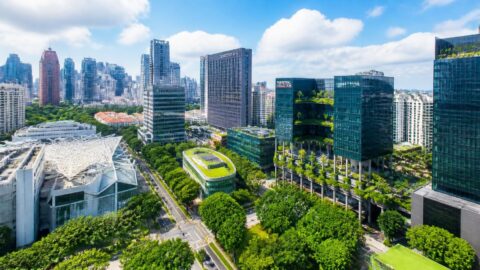
As a land-scarce island nation where disposal culminates in waste-to-energy incineration and ash sent to Semakau Landfill, understanding local packaging waste streams is critical for Singapore’s businesses.
| Straw Type | Common in Singapore? | Best Suited For |
|---|---|---|
| PLA compostable | Increasingly common | Cold drinks, bubble tea, iced coffee |
| Sugarcane bagasse | Common in F&B chains | Thicker drinks, smoothies |
| Paper | Widely used, especially fast food | Hot drinks, quick-service |
| Conventional plastic | Declining but still present | Being phased out in many outlets |
Are compostable straws mandatory in Singapore? Not specifically. Singapore’s current rules focus more broadly on packaging reporting and disposables reduction rather than mandating one specific material for straws, though this could evolve as the Zero Waste Masterplan progresses.
Do compostable straws actually get composted in Singapore? Not automatically — this is one of the most important and least understood parts of the picture, covered in depth in our dedicated article on Singapore’s composting infrastructure.
Are they more expensive than plastic straws here? Generally yes, though the gap narrows at bulk order volumes — we cover local sourcing and cost considerations in a later guide.
Do they hold up in Singapore’s hot, humid climate? Material choice matters here. Some compostable materials are more sensitive to heat and humidity than others — a topic detailed in our materials-focused article later in this series.
It’s tempting to treat “switching to compostable straws” as a single, simple decision. In Singapore’s specific context — dense urban living, limited composting infrastructure, an incineration-first waste system, and an evolving regulatory landscape — the real impact depends on more than the straw itself. Businesses that understand this full picture make more informed choices, avoid greenwashing pitfalls, and set more realistic expectations with customers.
This article opens a 10-part series exploring exactly that: Singapore’s regulations, the reality of local composting infrastructure, practical switching guides for F&B businesses, material comparisons suited to our climate, sourcing and cost considerations, and the genuine environmental impact of making the switch here. Read on to get the complete picture.