Few products capture Singapore’s F&B culture quite like bubble tea. With dozens of chains competing across malls, MRT stations, and neighbourhood corners, the humble boba straw has quietly become a small but telling symbol of the country’s sustainability shift. Here’s a closer look at how compostable straws fit into — and sometimes challenge — Singapore’s bubble tea obsession.
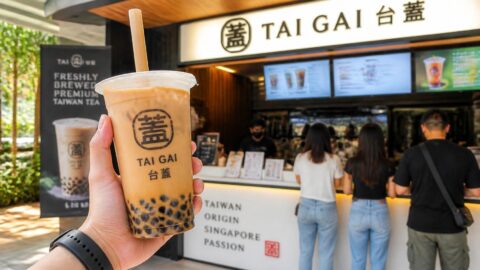
Bubble tea presents one of the toughest real-world tests for sustainable foodservice supplies, requiring wide diameters, strong piercing capabilities, and extended durability.
Standard drink straws just need to survive a cold or hot beverage for an hour or two. Bubble tea straws face a tougher job:
This combination makes bubble tea one of the more demanding real-world tests for compostable straw materials.
| Material | Piercing Strength | Pearl Flow (Wide Diameter) | Extended Durability | Common in SG Bubble Tea Shops |
|---|---|---|---|---|
| Sugarcane bagasse (wide) | Strong | Excellent | Good | Very common |
| PLA (wide) | Moderate | Good | Moderate — can soften over time | Moderate use |
| Paper (wide) | Weak-Moderate | Fair | Poor — softens quickly in milky drinks | Rare for boba specifically |
Sugarcane bagasse has emerged as the preferred material for boba-width compostable straws across much of Singapore’s bubble tea market, largely due to its structural strength — a critical factor when a straw needs to punch through a sealed lid without buckling.
Customer reception has evolved over the past few years:
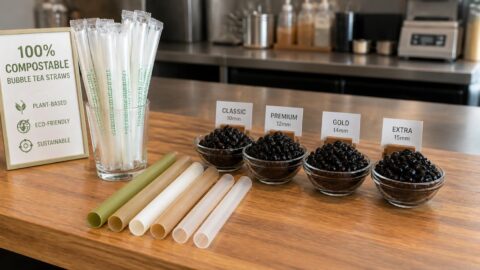
Sugarcane bagasse has emerged as the preferred material for boba-width compostable straws in Singapore, providing the structural strength needed to handle both thick milk tea and tapioca pearls.
“The straw goes soft too quickly.” Usually a sign of lower-quality PLA or an under-engineered bagasse blend. Testing multiple suppliers’ samples in your actual milk tea recipe (not just water) is the most reliable way to avoid this.
“It’s hard to pierce the sealed cup.” This points to insufficient rigidity at the straw tip. Look specifically for straws marketed or tested for sealed-cup piercing strength, not just general beverage use.
“The pearls get stuck.” Diameter mismatch is the usual culprit — always match straw diameter to your largest topping size, with a small margin for comfortable flow.
Several Singapore bubble tea brands have turned their straw switch into a visible part of their sustainability story — mentioning it on packaging, social media, or in-store signage. This reflects a broader trend: in a highly competitive bubble tea market with dozens of similar-tasting options, small sustainability signals can meaningfully influence customer perception and loyalty, particularly among younger, environmentally aware consumers who make up a large share of Singapore’s bubble tea customer base.
Do compostable bubble tea straws cost significantly more than plastic ones? Wide-diameter compostable straws typically cost more per unit than standard-size ones due to material volume, but the gap as a percentage of a typical bubble tea’s retail price is usually small.
Can the same compostable straw work for both regular drinks and bubble tea? Generally no — bubble tea requires a noticeably wider diameter and stronger piercing capability, so most shops stock a separate wide straw specifically for boba drinks.
Are reusable straws a realistic alternative for bubble tea shops? Reusable straws work well for dine-in customers who bring their own, but for a high-volume, largely takeaway bubble tea business model, compostable single-use straws remain the more practical default.
Bubble tea might be one of the toughest real-world tests for compostable straws, but it’s also one of the clearest showcases of how far the material has come. With the right straw — typically a well-engineered sugarcane bagasse option — Singapore’s bubble tea shops can deliver the same satisfying, reliable drinking experience customers expect, while meaningfully reducing single-use plastic.
Compostable straws and Singapore’s bubble tea culture have found a genuinely workable pairing, provided shops choose materials engineered for the job rather than treating boba straws as an afterthought.