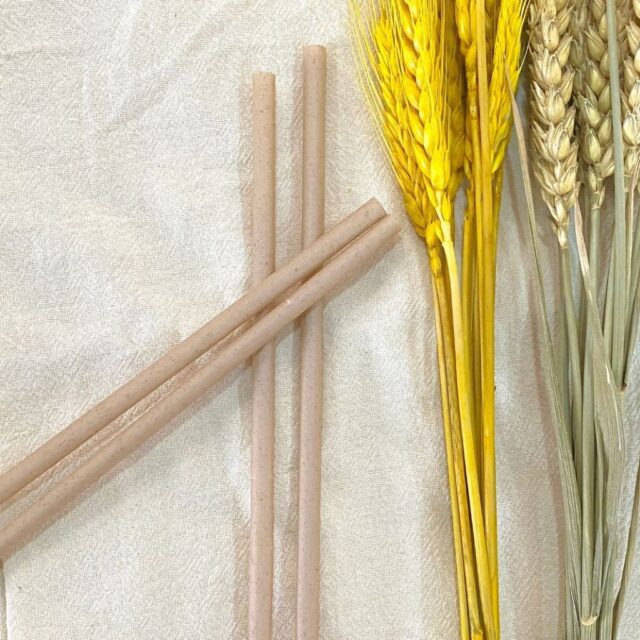
Penang’s identity as both Malaysia’s unofficial food capital and a significant manufacturing hub has created a distinctive intersection within the country’s compostable straws malaysia landscape — one where the state’s famously demanding street food beverage culture meets its established electronics and light manufacturing base, occasionally producing unexpected material innovation.
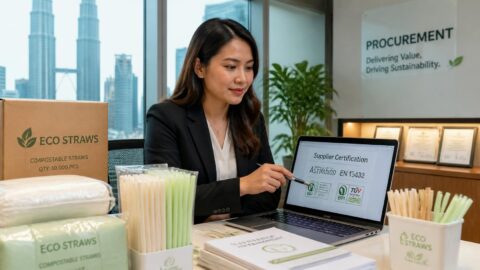
In Kuala Lumpur’s sophisticated corporate and mall-driven F&B landscape, professional procurement teams are moving beyond vague eco-claims, increasingly demanding documented certifications like ASTM D6400 or EN 13432 to support corporate ESG and sustainability requirements.
Penang is simultaneously known for UNESCO-listed hawker food and as a significant regional manufacturing and electronics hub, particularly around Bayan Lepas. While these identities might seem unrelated, several smaller Penang-based packaging and materials companies have leveraged the state’s existing manufacturing infrastructure and export logistics experience to enter the compostable packaging supply space, including straws.
| Local Beverage | Material Challenge | Common Solution |
|---|---|---|
| Sugarcane juice | Thick, pulpy liquid | Reinforced bagasse or thick-wall PLA |
| Air Bandung | Standard liquid consistency | Unlined paper adequate |
| Cendol (occasionally with straw) | Very thick, textured | Rarely straw-dependent; spoon preferred |
| Iced kopitiam beverages | Standard consistency, high humidity exposure | Sealed packaging, quality paper |
| Bubble tea (growing segment) | Tapioca pearls | Reinforced bagasse, wide-diameter PLA |
Penang’s decades-long history as a manufacturing and export hub — initially built around electronics and light industry — has created a base of local expertise in quality control, export documentation, and supply chain logistics that a small number of packaging-focused companies have begun applying to compostable straw production and distribution, positioning the state as a potential emerging player in Malaysia’s broader compostable packaging supply chain.
Despite the state’s manufacturing sophistication, George Town’s traditional hawker vendors remain highly cost-sensitive when it comes to compostable straw material choices, generally opting for the most affordable adequate option — typically standard unlined paper — rather than premium PLA or specialty bagasse products, reflecting the same margin pressures seen among small food vendors throughout Malaysia.
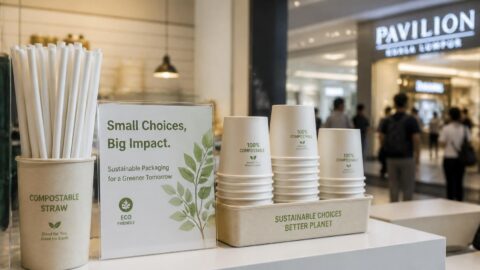
Leveraging decades of expertise in quality control, electronics, and export logistics from hubs like Bayan Lepas, a growing number of Penang-based companies are exploring how local manufacturing infrastructure can support the next generation of compostable packaging solutions.
Some Penang-based businesses with existing export relationships, built through the state’s electronics and manufacturing sector, have begun exploring whether similar export logistics expertise could support future compostable straw manufacturing for both domestic Malaysian consumption and regional export to neighboring Southeast Asian markets, though this remains a relatively early-stage development within the broader industry.
Penang’s substantial food tourism industry, drawing visitors specifically interested in the state’s culinary heritage, has created a secondary market for premium, aesthetically distinctive compostable straws among boutique cafés and heritage-focused F&B businesses catering to this tourist segment, distinct from the cost-driven material choices common among traditional hawker vendors.
Unlike Kuala Lumpur’s corporate, certification-driven procurement landscape, Penang’s compostable straw market reflects a more grassroots mix of cost-sensitive hawker adoption, tourism-driven premium demand, and early-stage local manufacturing experimentation — creating a genuinely different market dynamic shaped by the state’s distinctive dual identity as both a food destination and manufacturing center.
Does Penang manufacture its own compostable straws locally? Not extensively yet — most compostable straws sold in Penang remain imported, though a small number of local companies have begun exploring manufacturing and material sourcing opportunities.
Why are Penang’s hawker vendors generally cost-sensitive about straw materials? Thin profit margins common among small food vendors mean most hawker stalls prioritize the most affordable adequate compostable option rather than premium materials.
Is there research interest in local compostable materials in Penang? Yes — local universities and a handful of startups have shown interest in agricultural byproduct applications relevant to compostable packaging, though this remains an early-stage development.
Penang’s compostable straw story reflects the state’s broader dual identity — a place where deep culinary tradition and manufacturing sophistication coexist, occasionally producing unexpected innovation. While cost sensitivity still drives most day-to-day material choices among the state’s iconic hawker vendors, Penang’s manufacturing base and research institutions suggest genuine potential for the state to become a more significant player in Malaysia’s compostable packaging supply chain over time, particularly if local sourcing initiatives currently in early stages continue maturing into more established commercial ventures.