Johor Bahru’s position directly across the Causeway from Singapore has created a genuinely distinctive supply chain story within Malaysia’s compostable straws malaysia landscape — one shaped less by local manufacturing or hawker culture and more by cross-border logistics, import relationships, and the practical realities of operating a business economy tightly linked to its wealthier island neighbor.
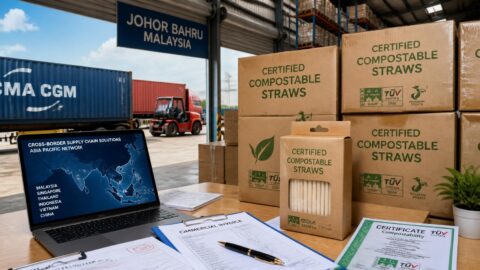
Johor Bahru’s position directly across the Causeway from Singapore creates a distinctive import and supply chain dynamic, where cross-border trade routes and international logistics shape how compostable straws reach southern Malaysia.
Johor Bahru’s proximity to Singapore’s Port of Singapore and Tuas logistics infrastructure gives businesses in the city practical advantages when sourcing imported compostable straw materials, including PLA products often shipped through Singapore before final distribution into Malaysia via the Causeway or Second Link crossings.
| Import Route | Common Materials | Typical Users |
|---|---|---|
| Via Singapore (Causeway/Second Link) | PLA, specialty certified products | Corporate/hospitality buyers near border |
| Direct port import (Pasir Gudang) | Bulk bagasse, standard paper | Larger distributors, wholesale |
| Overland from Peninsular Malaysia | Domestically distributed products | General local F&B businesses |
| Regional Southeast Asian shipping | Sugarcane bagasse (Indonesia/Thailand) | Bulk buyers, cost-focused operations |
Johor Bahru’s cross-border economic relationship with Singapore creates distinctive currency exposure for businesses sourcing compostable straws, particularly when purchasing through Singapore-linked supply chains priced in Singapore dollars rather than Malaysian ringgit. This exchange rate sensitivity means compostable straw costs for JB businesses sourcing through this route can fluctuate more noticeably than for businesses relying purely on domestic Malaysian supply chains.
The broader Iskandar Malaysia special economic zone, encompassing Johor Bahru and surrounding development areas, has attracted significant logistics and light manufacturing investment, including some interest from packaging-adjacent industries. While dedicated compostable straw manufacturing remains limited within the zone specifically, its developed industrial infrastructure and export-oriented business environment create reasonable potential for future local production capacity.
Businesses in Johor Bahru serving corporate clients with operations spanning both Malaysia and Singapore — common given the Iskandar Malaysia zone’s cross-border investment base — often need to source compostable straws meeting certification standards recognized in both markets, creating a somewhat more demanding procurement bar than typical for purely domestic Malaysian businesses.
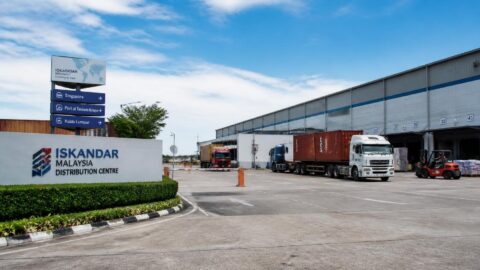
Leveraging proximity to Singapore’s Port of Singapore and regional trade routes, businesses across the Iskandar Malaysia economic zone access alternative import pathways that bridge domestic Malaysian channels and international certification standards.
Shopping malls and hotels near the Causeway and CIQ complex, given their significant Singaporean weekend visitor traffic, often prioritize certified compostable straw materials recognized by cross-border customers already familiar with Singapore’s own packaging standards, creating localized demand patterns distinct from more inland Malaysian cities where customer expectations are shaped purely by domestic Malaysian norms.
While Kuala Lumpur functions as Malaysia’s primary national distribution hub for compostable straw materials, Johor Bahru’s cross-border position creates a secondary, geographically distinct import pathway particularly relevant for businesses in southern Peninsular Malaysia, occasionally offering more direct access to certain Singapore-linked or internationally certified products than standard KL-routed distribution channels.
Do compostable straws cost more in Johor Bahru due to cross-border sourcing? It varies — Singapore-routed imports can carry currency exposure and different pricing than standard Malaysian distribution, though many JB businesses still rely on typical Peninsular Malaysian supply chains for cost efficiency.
Are there compostable straw manufacturers within Iskandar Malaysia? Not extensively yet — while the zone’s industrial infrastructure creates reasonable potential, dedicated compostable straw manufacturing remains limited compared to general import-based distribution.
Why do businesses near the Causeway care more about certification than other Malaysian cities? Significant Singaporean cross-border customer traffic has created demand for materials meeting standards recognized in both the Malaysian and Singaporean markets.
As economic integration between Johor Bahru and Singapore continues deepening through ongoing Iskandar Malaysia development, expect cross-border supply chain dynamics to remain an increasingly important, if still secondary, pathway shaping how compostable straw materials reach businesses throughout southern Peninsular Malaysia.
Johor Bahru’s compostable straw story illustrates how proximity to a well-developed neighboring market can create distinctive supply chain dynamics independent of purely domestic factors. As Iskandar Malaysia’s industrial base continues developing, expect Johor Bahru’s unique position as both a Malaysian city and a practical extension of the broader Singapore-Malaysia economic corridor to keep shaping how compostable straws are sourced, priced, and distributed across the region.