Kuching’s position within Sarawak, one of the world’s most significant sago-producing regions, creates a genuinely distinctive angle within Malaysia’s compostable straws malaysia landscape — one where an centuries-old traditional starch industry sits largely untapped as a potential local raw material source for modern bioplastic and compostable packaging production.
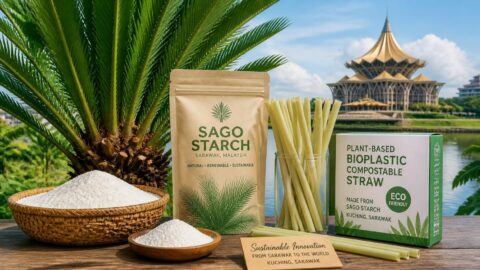
As one of the world’s leading producers of sago starch, Sarawak sits on a largely untapped, abundant local raw material source that theoretically offers significant potential for future bioplastic and compostable straw manufacturing.
Sarawak has long been one of the world’s leading producers of sago, a starch extracted from the trunk of the sago palm and traditionally used in Sarawakian cuisine, including in dishes like linut. This substantial agricultural industry, concentrated particularly around areas like Mukah and Dalat, represents a significant starch-producing capacity that shares underlying chemistry relevant to PLA-style bioplastic production, though this connection remains largely unexplored commercially.
| Starch Source | Current PLA Use | Sarawak Relevance |
|---|---|---|
| Corn starch | Dominant global PLA source | Not locally grown at scale in Sarawak |
| Cassava starch | Secondary regional PLA source | Limited but present in parts of Malaysia |
| Sago starch | Currently minimal PLA application | Abundant in Sarawak, largely untapped for this use |
| Sugarcane (for bagasse, not PLA) | Common bagasse source | Not a significant Sarawak crop |
Despite Sarawak’s substantial sago production capacity, no significant commercial-scale sago-based compostable straw or PLA production currently exists in Kuching or the broader state, reflecting the considerable technical and capital investment required to develop new bioplastic processing capability, even where raw material theoretically exists in abundance. Most compostable straws currently used in Kuching remain imported, following the same pattern seen across most other Malaysian cities.
Universiti Malaysia Sarawak (UNIMAS) and other regional research institutions have shown periodic academic interest in Sarawak’s agricultural byproducts, including sago waste streams, as potential inputs for various bioplastic and sustainable materials research, though this interest has generally remained at the research and publication stage rather than translating into commercial production ventures specifically targeting compostable straws.
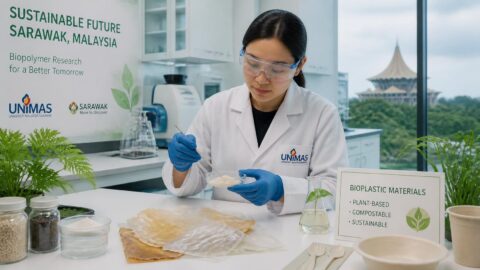
While regional research institutions like Universiti Malaysia Sarawak (UNIMAS) have explored agricultural byproduct applications, bridging the gap between Sarawak’s abundant sago starch production and commercial compostable straw manufacturing remains an exciting, capital-intensive future opportunity.
Similar to patterns seen in Kota Kinabalu, Kuching’s role as a gateway to Bako National Park and Semenggoh Wildlife Centre has created a tourism segment genuinely interested in environmental authenticity, occasionally prompting eco-tourism operators to ask suppliers pointed questions about material sourcing and end-of-life outcomes rather than accepting generic “compostable” marketing claims without scrutiny.
Sarawak’s state government has periodically expressed interest in developing a broader “bioeconomy” strategy leveraging the state’s substantial agricultural and forestry resources, creating a policy environment theoretically supportive of future ventures connecting resources like sago production to value-added applications such as compostable packaging materials — though concrete commercial development in this specific application remains limited to date.
While Ipoh’s compostable straw entrepreneurship story centers on small-batch, grassroots business experimentation, Kuching’s potential sago connection represents a fundamentally different scale of opportunity — one requiring more significant capital investment and technical bioplastic processing capability, but with access to a genuinely abundant, currently underutilized raw material resource that few other Malaysian regions can match.
Does Kuching currently produce compostable straws from local sago? No — while Sarawak’s substantial sago industry theoretically offers relevant raw material potential, no significant commercial sago-based compostable straw production currently exists.
Why hasn’t Sarawak’s sago industry been used for bioplastic production yet? Developing new bioplastic processing capability requires substantial technical expertise and capital investment, even where raw material exists in abundance, and this connection remains largely unexplored commercially.
Are Kuching’s tourism businesses concerned about compostable straw sourcing? Many eco-tourism operators, particularly those serving rainforest and wildlife tourism segments, increasingly ask suppliers about genuine material sourcing and disposal outcomes rather than accepting generic marketing claims.
Kuching’s compostable straw story represents one of the more intriguing “what if” scenarios within Malaysia’s broader compostable packaging landscape — a region sitting on substantial, currently underutilized starch production capacity that theoretically could support genuine local bioplastic manufacturing. Whether this potential ever translates into actual commercial production remains an open question, but it represents a distinctive angle within Sarawak’s broader relationship to the compostable materials conversation shaping food and beverage packaging across Malaysia.