Shah Alam’s status as one of Selangor’s most significant industrial zones, home to a dense concentration of manufacturing facilities across multiple sectors, creates a distinctive angle within Malaysia’s compostable straws malaysia landscape — one centered on the city’s genuine potential as a domestic production hub rather than purely a consumption market.
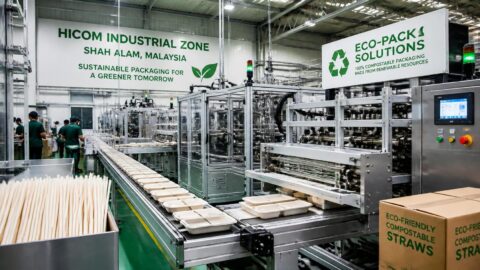
With its dense concentration of industrial parks, skilled manufacturing workforce, and close proximity to Port Klang, Shah Alam possesses the robust infrastructure needed to transition from a consumption market into a leading domestic hub for compostable straw production.
Shah Alam hosts extensive industrial parks, including Seksyen 15, Seksyen 22, and the broader HICOM industrial zone, with established manufacturing capability spanning automotive, consumer goods, and packaging sectors. This existing infrastructure — including access to skilled manufacturing labor, established logistics networks, and proximity to Port Klang — creates meaningful potential advantages for compostable straw production compared to cities lacking similar industrial foundations.
| Advantage | Relevance to Compostable Straw Production |
|---|---|
| Established industrial zoning | Ready infrastructure for new manufacturing facilities |
| Proximity to Port Klang | Efficient import of raw materials, export of finished products |
| Skilled manufacturing workforce | Reduces training investment for new production lines |
| Existing packaging sector presence | Potential for equipment/expertise crossover |
| Strong transport links | Efficient distribution across Peninsular Malaysia |
While most Malaysian cities primarily function as compostable straw consumption markets reliant on imports, Shah Alam’s industrial base creates a plausible pathway toward domestic production capacity, similar to how the city’s existing manufacturing sector already supports various packaging and consumer goods production for both domestic Malaysian consumption and regional export.
Port Klang, Malaysia’s largest port and located in close proximity to Shah Alam’s industrial zones, provides significant logistics advantages for any compostable straw manufacturing operation — enabling efficient import of raw materials like PLA resin or bagasse feedstock, alongside potential export capacity for finished products to other Southeast Asian markets, positioning Shah Alam favorably compared to more geographically isolated Malaysian manufacturing locations.

Proximity to Port Klang gives Shah Alam’s manufacturing sector a distinct logistics advantage, enabling efficient import of raw materials like PLA resin and export of finished compostable straws across domestic and regional Southeast Asian markets.
Selangor state’s generally more developed industrial policy environment, combined with Malaysia’s broader national sustainability roadmap objectives, creates a policy backdrop theoretically supportive of local compostable packaging manufacturing investment, though no major dedicated compostable straw manufacturing facility has yet been established at significant scale within Shah Alam specifically.
Shah Alam’s status as home to Universiti Teknologi MARA (UiTM), one of Malaysia’s largest public universities with relevant engineering and materials science programs, creates potential for academic-industry collaboration relevant to compostable packaging materials research and development, similar to research interest documented at other Malaysian institutions, though concentrated within a city that also offers genuine manufacturing infrastructure to translate research into production.
While Penang’s manufacturing story centers on leveraging existing electronics and export infrastructure with some crossover potential into packaging, Shah Alam’s more directly relevant industrial zoning and packaging sector presence — combined with Port Klang’s superior logistics position relative to Penang’s own port infrastructure — arguably creates an even more directly applicable manufacturing foundation specifically for compostable straw production.
Is there currently significant compostable straw manufacturing in Shah Alam? Not yet at major scale — while the city’s industrial infrastructure creates genuine potential, no significant dedicated compostable straw manufacturing facility has been established there to date.
Why is Port Klang’s proximity important for potential manufacturing? It provides efficient logistics for both importing raw materials and exporting finished products, a significant advantage for any manufacturing operation serving both domestic and regional Southeast Asian markets.
Does Shah Alam have relevant research institutions for compostable materials development? Yes — Universiti Teknologi MARA (UiTM) offers relevant engineering and materials science research capacity that could theoretically support future compostable packaging development.
Shah Alam’s compostable straw story represents a genuinely different narrative than most Malaysian cities within this broader landscape — one focused on manufacturing potential rather than consumption patterns alone. As Malaysia’s compostable packaging market continues growing and import dependency remains a persistent industry challenge, Shah Alam’s established industrial infrastructure positions it as one of the country’s most plausible candidates for meaningful domestic compostable straw production, should investment ultimately materialize to match its underlying manufacturing potential.