Singapore doesn’t make sustainability policy in a vacuum — it sits within a Southeast Asian region where neighboring countries are taking notably different approaches to single-use plastic and compostable alternatives. For businesses sourcing straws regionally, or simply curious how Singapore stacks up, here’s a side-by-side look.
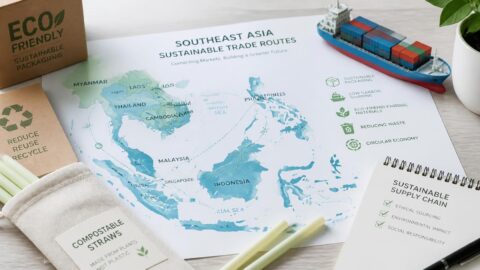
As Singapore balances voluntary adoption with national waste frameworks, comparing regional policies across Malaysia, Thailand, Indonesia, and the Philippines reveals a diverse and fast-evolving Southeast Asian sustainable packaging landscape.
| Country | Plastic Straw Regulation Approach | Compostable Straw Adoption Level |
|---|---|---|
| Singapore | No blanket nationwide ban; strong voluntary/corporate adoption | High among F&B chains and hospitality |
| Malaysia | State-level restrictions in some areas (e.g., Selangor, Penang); no unified federal ban | Moderate, growing in urban centers |
| Thailand | Roadmap-based national plastic reduction strategy with phased restrictions | Moderate-high, especially in Bangkok’s F&B sector |
| Indonesia | Regional/city-level bans (e.g., Bali, Jakarta) rather than national mandate | Growing, concentrated in tourism-heavy areas |
| Philippines | City-level ordinances (e.g., various LGUs) rather than national ban | Moderate, uneven across regions |
Singapore’s regulatory style across many sustainability issues tends to favor structured national frameworks (like the Zero Waste Masterplan) combined with strong voluntary corporate participation, rather than blanket consumer-facing bans. This means the shift toward compostable straws in Singapore has been driven more by:
…rather than by legal mandate, which is more the pattern seen in some Indonesian and Philippine cities with localized ordinances.
From Thailand’s phased national roadmap: Thailand’s more structured, staged national plastic reduction plan offers a useful model for businesses thinking about their own internal phase-out timelines — starting with the most visible or easily replaced items (like straws) before tackling more complex packaging categories.
From Bali’s tourism-driven adoption in Indonesia: Bali’s relatively fast adoption of compostable and reusable alternatives, driven heavily by tourism industry expectations, shows how customer-facing sectors (hospitality, F&B) can move faster than broader national policy — a dynamic Singapore’s own hospitality sector mirrors closely.
From Malaysia’s state-level variation: Malaysia’s patchwork of state-level rules is a reminder that regional consistency isn’t guaranteed even within a single country — useful context for Singapore-based businesses with operations or supply chains crossing into Malaysia.
Southeast Asia’s growing compostable straw manufacturing base — particularly sugarcane bagasse production tied to the region’s sugar industry — means Singapore businesses increasingly benefit from regional proximity when sourcing, rather than relying solely on longer-distance imports from China or Europe. This regional manufacturing growth has been partly driven by demand from neighboring markets implementing their own restrictions, creating a supply ecosystem Singapore businesses can tap into.
| Market | General Consumer Attitude Toward Compostable Straws |
|---|---|
| Singapore | High awareness, generally positive reception, especially among younger consumers |
| Malaysia | Growing awareness, more variable reception depending on urban/rural context |
| Thailand | Strong positive reception in Bangkok and tourist areas |
| Indonesia | Very positive in tourism hubs like Bali; more mixed elsewhere |
| Philippines | Increasing awareness, particularly in Metro Manila and major cities |
Businesses operating across multiple Southeast Asian markets face a genuinely fragmented regulatory landscape — what’s optional in Singapore might be mandated in parts of Malaysia or Indonesia. Practical implications include:
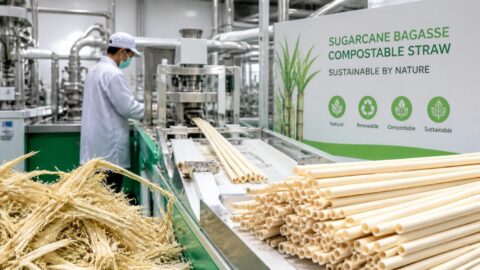
Southeast Asia’s growing manufacturing base—particularly for sugarcane bagasse products tied to regional agriculture—offers Singapore-based F&B businesses robust, proximity-based sourcing advantages.
Is Singapore behind or ahead of its neighbors on plastic straw reduction? It’s more accurate to say Singapore takes a different approach — leaning on voluntary corporate and consumer-driven adoption rather than blanket legal bans — resulting in high compostable straw usage without a formal nationwide mandate, a contrast to the localized ban approach seen in parts of Indonesia and the Philippines.
Do regional manufacturing hubs make sourcing cheaper for Singapore businesses? Generally yes — proximity to Southeast Asia’s growing compostable straw manufacturing base, especially for sugarcane bagasse products, has helped keep regional sourcing more cost-competitive than importing from further afield.
Should Singapore businesses expect a national plastic straw ban eventually? Regulatory direction can evolve, and businesses are best served by monitoring updates from Singapore’s national environmental authorities rather than assuming any particular outcome, while continuing to build sustainable practices proactively regardless of formal mandates.
Singapore’s approach to compostable straws reflects its broader regulatory style — structured national strategy paired with strong voluntary adoption — standing in contrast to the more localized, ordinance-driven approaches seen elsewhere in Southeast Asia. For businesses, understanding this regional context isn’t just interesting background — it has real implications for sourcing strategy, cross-border operations, and anticipating where regulation might head next.
Compostable straws in Singapore exist within a genuinely regional story, one where sourcing, policy, and consumer attitudes are all shaped by developments well beyond the island’s borders.