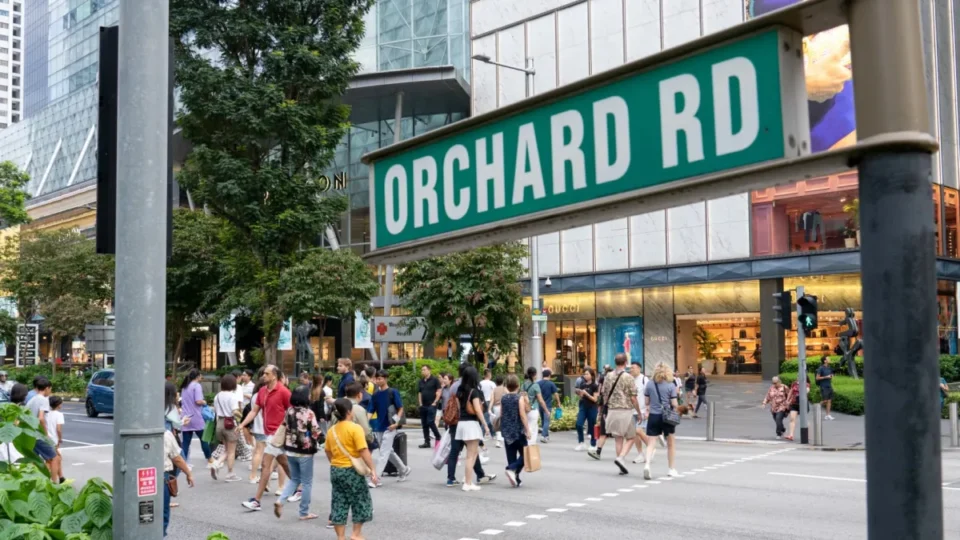
Orchard Road’s malls don’t just sell fashion and electronics — they run some of the busiest coffee counters in Singapore, from international chain flagships to homegrown specialty roasters tucked into basement food halls. With this volume comes an enormous, often invisible stream of paper cup waste that shapes how retail F&B tenants think about packaging, branding, and sustainability all at once.
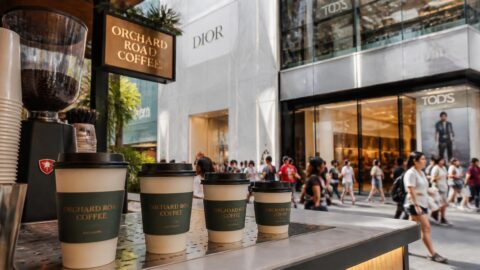
Along Singapore’s premier shopping boulevard, paper cups serve as both high-visibility mobile marketing and a major daily waste management challenge for retail F&B tenants.
Along Orchard Road, the paper cup has evolved into something more than disposable packaging — it’s a walking advertisement. International chains and homegrown brands alike design cup sleeves and prints specifically for high foot-traffic environments, where a shopper carrying a distinctly branded cup through ION Orchard or Ngee Ann City functions as free, mobile marketing.
| Factor | Impact on Cup Waste |
|---|---|
| High daily foot traffic | Enormous cumulative cup volume |
| Multiple coffee touchpoints per mall | Redundant packaging across nearby outlets |
| Tourist takeaway habits | Cups often discarded immediately after event/photo |
| Limited on-site recycling bins | Most cups end up as general waste |
Because most disposable coffee cups use a thin plastic lining to prevent leaks, they can’t simply be tossed into standard recycling bins — a challenge explored in more depth in our related article on paper cups Singapore, which breaks down why “paper” cups are often harder to recycle than they appear.
Several mall operators along Orchard Road have introduced bring-your-own-cup discount schemes at their food court and café tenants, offering a small price reduction to shoppers who skip the disposable cup. Uptake has been gradual, but mall management companies report growing interest, particularly among younger shoppers already accustomed to similar schemes at neighborhood cafés.
Orchard Road’s approach to straws has generally moved faster than its approach to cups, partly because straws are cheaper and easier to swap without disrupting a brand’s established cup design and supply contracts. For more on how the district has handled straw sustainability specifically, see our related piece on paper straws Singapore.
Orchard Road’s high tourist volume adds a distinct wrinkle to cup waste management. Visitors often purchase a coffee or bubble tea as part of a shopping break, consume it while walking between stores, and discard the cup in whichever bin is nearest — frequently a general waste bin rather than a dedicated recycling point, given limited signage and unfamiliarity with local recycling categories among first-time visitors.
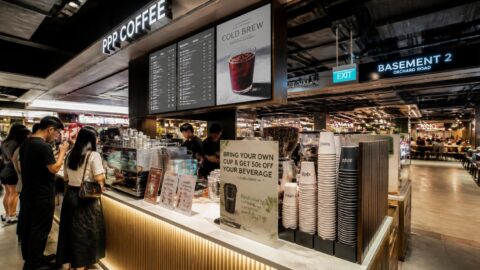
As mall operators and coffee chains trial bring-your-own-cup schemes and sustainable labeling, Orchard Road continues to balance brand aesthetics with growing environmental responsibility.
Are paper cups from Orchard Road cafés recyclable in standard mall bins? Generally no — most disposable coffee cups have a plastic lining that prevents standard recycling, so unless a mall has a specialized program, they typically end up as general waste.
Do Orchard Road cafés offer discounts for bringing a reusable cup? Many do, though discount amounts and participation vary by individual F&B tenant and mall operator.
Why do cup designs matter so much to brands in this district? Given Orchard Road’s high foot traffic and tourist visibility, a well-designed cup functions as mobile advertising, making cup aesthetics a genuine branding priority alongside sustainability concerns.
Orchard Road’s cup practices differ notably from neighborhood-scale districts, where a single café owner can make packaging decisions independently. Here, franchise headquarters requirements, mall-wide sustainability certifications, and marketing considerations tied to Singapore’s broader tourism image all shape how quickly cup sustainability initiatives spread across the boulevard’s many F&B tenants. Individual outlet managers often have limited autonomy to change suppliers unilaterally, meaning meaningful shifts typically require sign-off at the regional or headquarters level before rolling out across Orchard Road’s flagship locations.
Orchard Road’s cup culture reflects the tension between marketing value and environmental responsibility that defines much of Singapore’s retail sustainability journey. As mall operators continue experimenting with bring-your-own-cup incentives and better recycling infrastructure, expect the balance to gradually shift — even as cups remain a powerful, visible branding tool for the F&B businesses that call this iconic boulevard home.