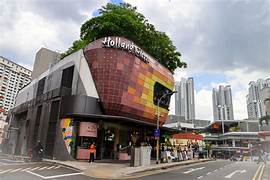
Holland Village’s large expatriate population has shaped nearly every corner of its café and dining scene, and disposable cup habits are no exception. This internationally flavored neighborhood has become one of Singapore’s more consistent adopters of reusable cup culture, driven by residents who often arrive with sustainability expectations formed in other global cities.
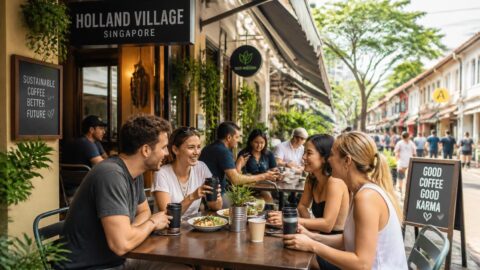
Driven by an internationally influenced resident base with sustainability expectations formed in other global cities, Holland Village leads the way in reusable cup adoption and paper cup sustainability.
Many long-term expat residents in Holland Village come from cities in Europe, Australia, and North America where reusable cup culture and cup-related sustainability messaging were already well established before similar trends took hold broadly in Singapore. This has created a customer base that frequently expects — and actively requests — reusable cup options at their regular neighborhood café.
| Indicator | Observation |
|---|---|
| Reusable cup visibility | Higher than typical Singapore neighborhoods |
| Café BYO-cup discount participation | Widely offered, actively promoted |
| International bakery chains | Often import cup sustainability practices from home markets |
| Specialty grocers | Stock reusable cup and tumbler products |
Holland Village’s well-known weekend brunch culture drives significant beverage demand, from fresh juices to specialty iced coffee, much of it served in paper cups for takeaway orders or those dining outdoors along the neighborhood’s café-lined streets. This connects to broader brunch culture dynamics also explored in our related coverage of paper straws in the district, available in our article on paper straws Singapore.
Holland Village is home to several specialty grocers catering specifically to its international resident base, many of which stock a wider range of reusable cup and tumbler products earlier and more prominently than mainstream Singapore supermarket chains. This retail availability reinforces the neighborhood’s broader cup sustainability culture, making it easier for residents to adopt reusable habits without needing to travel elsewhere for suitable products.
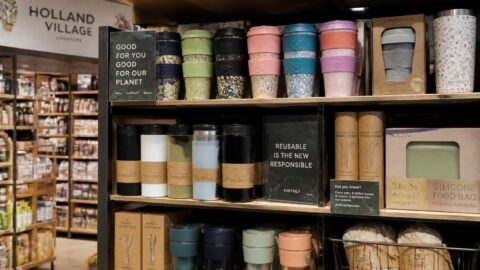
Stocking a wide selection of reusable tumblers and eco-friendly products earlier than mainstream supermarkets, Holland Village’s specialty grocers make sustainable daily habits easily accessible for local residents.
Several international bakery and café chains operating in Holland Village have brought sustainability practices from their home markets directly into their Singapore outlets, including cup recycling partnerships and bring-your-own-cup discount structures that sometimes exceed what’s typically offered at comparable Singapore-founded chains. This creates an interesting dynamic where global brand standards occasionally outpace local baseline expectations.
While reusable cup adoption remains a modest, growing trend nationally — as discussed in our broader analysis in paper cups Singapore — Holland Village’s unique demographic composition has allowed it to move meaningfully ahead of many other neighborhoods, offering a preview of what more widespread adoption might eventually look like as sustainability awareness continues to grow across Singapore’s broader population.
Long-established local F&B businesses in Holland Village, including several that predate the neighborhood’s transformation into an expat hub, have gradually adjusted their cup practices in response to consistent customer requests for reusable or better-lined paper cup options — a subtler version of the demand-driven change also seen in the district’s approach to straws.
Why does Holland Village show stronger reusable cup adoption than other Singapore neighborhoods? Its large expatriate population, many from regions with established reusable cup culture, has created stronger baseline customer demand for sustainable cup practices.
Do specialty grocers in Holland Village sell reusable cups? Yes — several grocers catering to the international resident base stock a wider range of reusable cup and tumbler products than typical mainstream supermarkets.
Are Holland Village’s cup sustainability practices representative of Singapore as a whole? Not entirely — the neighborhood’s unique demographic makeup means it has generally moved faster on cup sustainability than most other districts nationally.
Holland Village’s blend of expat and local communities has created interesting cross-pollination over time, with some traditional local food stalls in the area gradually introducing better cup options partly in response to consistent demand from the neighborhood’s international resident base — a subtler version of the peer-effect dynamics also seen in more purely local districts elsewhere in Singapore. Stall owners in this position often describe the transition as gradual rather than sudden, prompted by repeated customer requests over months or years rather than any single defining moment.
Holland Village’s cup culture offers a glimpse of what more widespread, expectation-driven sustainability adoption might look like as Singapore’s population continues to diversify and global sustainability norms keep influencing local habits. For now, this internationally-flavored neighborhood remains one of the more consistent examples of how demographic composition can accelerate sustainable packaging trends well ahead of broader citywide timelines.