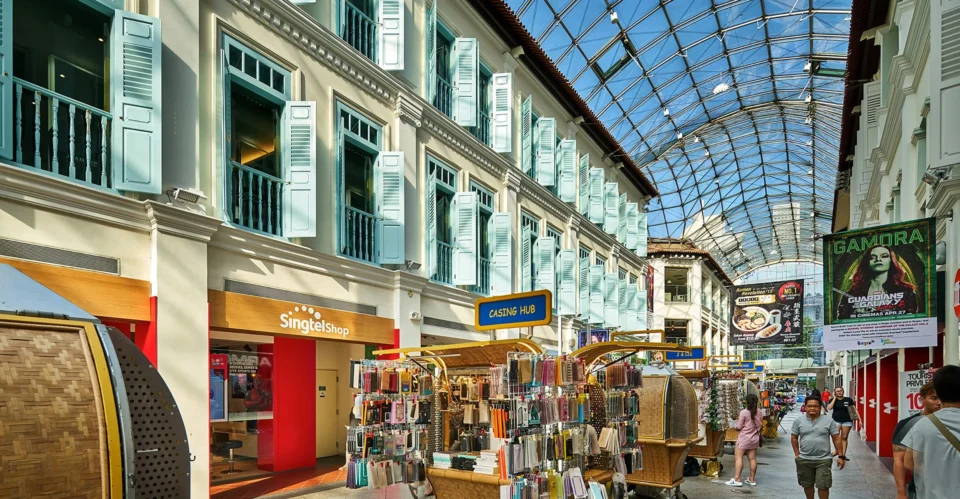
If Singapore has a bubble tea capital, Bugis has a strong claim to the title. With one of the highest concentrations of bubble tea outlets in the country packed into Bugis Street and Bugis Junction, this youth culture hub also generates one of Singapore’s densest concentrations of disposable cup waste — most of it still plastic rather than paper, for reasons rooted in the drink itself.
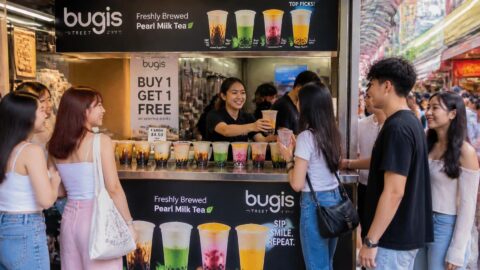
As Singapore’s bubble tea capital, Bugis generates massive daily cup waste, highlighting a persistent packaging dilemma where the drink’s iconic transparency resists the shift toward opaque paper cups.
Unlike coffee, bubble tea presents a specific packaging challenge that has slowed paper cup adoption across the industry, including in Bugis:
| Material | Transparency | Structural Rigidity | Common Use in Bugis |
|---|---|---|---|
| PET plastic cup | High | High | Most common |
| Paper cup (opaque) | None | Moderate | Rare for bubble tea specifically |
| Compostable PLA cup (clear) | High | Moderate | Emerging, higher cost |
| Reusable cup | High (if clear) | High | Growing but still niche |
Bugis has seen much stronger adoption of paper straws than paper cups, a contrast worth noting given how the two packaging elements are often discussed together. For more on how the district approached the straw side of the equation, see our related article on paper straws Singapore, which explores the specific engineering challenges bubble tea straws present. Cups have proven a tougher packaging element to shift, largely due to the transparency and structural requirements unique to bubble tea presentation.
Some bubble tea brands, both in Bugis and nationally, have begun experimenting with clear compostable PLA cups as a middle-ground solution, preserving the visual appeal customers expect while offering better environmental credentials than standard PET plastic. These cups remain more expensive and are not yet widely adopted among Bugis’s more budget-conscious independent bubble tea stalls, though several larger international chains have begun trialing them in select outlets.
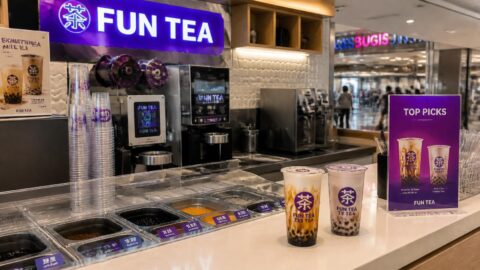
Requiring structural rigidity, clear visibility for colorful layers, and compatibility with heat-sealing machines, bubble tea presents unique structural hurdles that make replacing standard plastic cups with paper much more complex.
Despite the cup material challenge, a modest but growing number of Bugis’s bubble tea customers — particularly students and young professionals — have begun bringing personal reusable cups to their favorite outlets, encouraged by small discounts offered at select bubble tea chains. This mirrors broader reusable cup trends discussed in our related article on paper cups Singapore, which covers similar bring-your-own-cup incentive schemes across the wider F&B sector.
Bugis Street’s dense concentration of small, independent bubble tea kiosks creates significant challenges for any coordinated cup recycling effort, since individual stall operators typically lack the space or resources to manage specialized waste streams. Most bubble tea cups from the district, whether plastic or the less common paper variety, currently end up in general waste rather than being recycled, given the combination of plastic lids, films, and cup materials that complicate standard recycling processes.
Bugis’s frequent pop-up bubble tea concepts and seasonal drink launches add further complexity to cup sustainability efforts, since temporary operators often prioritize cost and visual novelty over environmental considerations, resulting in inconsistent cup practices that shift with each new trend cycle passing through the district.
Why don’t Bugis’s bubble tea shops use paper cups more often? Bubble tea requires transparent, structurally rigid cups to showcase the drink’s visual appeal and hold up to ice and condensation — qualities standard paper cups struggle to provide.
Are there more sustainable cup options for bubble tea? Clear compostable PLA cups are emerging as an alternative, offering similar transparency to plastic while providing better environmental credentials, though at a higher cost.
Do any Bugis bubble tea shops offer discounts for reusable cups? Some larger chains do, though uptake remains modest compared to disposable cup use, particularly among budget-conscious student customers.
Bugis illustrates how sustainability progress doesn’t move at the same pace across every packaging element — while paper straws found a workable path forward even for bubble tea’s demanding requirements, cups remain a tougher nut to crack given the drink’s visual and structural needs. As compostable clear cup technology continues improving, expect Bugis’s bubble tea scene to eventually find its own version of the paper straw breakthrough, though likely on a longer timeline than the district’s already-established shift toward more sustainable straws.